
Groundcovers are the unsung heroes of the garden—they focus on growing wide rather than tall. Most of them put on a stunning floral show while doing the heavy lifting of choking out weeds. We’ve rounded up some of the best groundcovers for your yard, including a few personal favorites that deserve a spot in your landscape.
[[pflanzen]]
++Dwarf Periwinkle (Vinca minor)
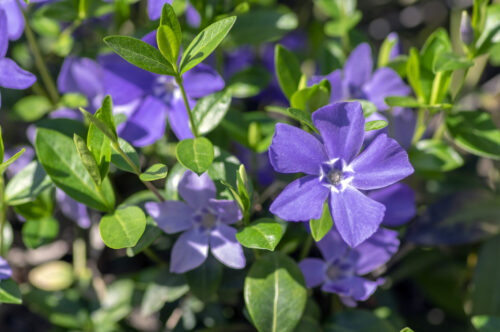
Dwarf Periwinkle is a classic creeping vine that stays low to the ground, usually topping out at about eight inches. It spreads quickly via runners that can reach up to twenty inches long, making it perfect for covering bare patches in a hurry. In the spring, you’ll get a beautiful contrast of bluish-purple flowers against dark green foliage. True to its name, it stays evergreen through the winter, providing a year-round barrier against weeds in almost any spot in your garden.
++Bunchberry Dogwood (Cornus canadensis)
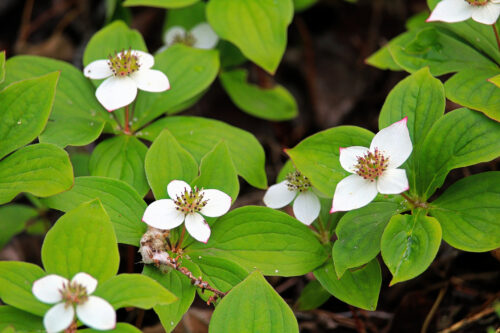
Bunchberry, also known as Creeping Dogwood, is a bit of a hidden gem. Unlike its bushy cousins, this species is a low-growing perennial that only reaches about four to eight inches in height. It offers fantastic multi-season interest: the oval leaves turn a gorgeous orange-red in the fall, and from July to August, it’s covered in white blooms. Those flowers eventually turn into bright red berries that look amazing in the garden.
++Sea Thrift (Armeria maritima)
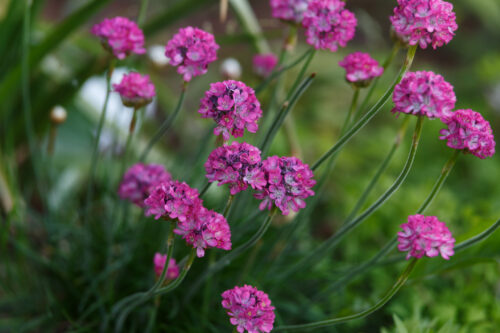
This compact, mounding perennial produces adorable pink or white “flower pom-poms” from May all the way through September. It’s incredibly tough, salt-tolerant, and stands up well to the wind, forming a dense carpet that weeds can’t penetrate. Thanks to its deep root system, it doesn’t need much water or fertilizer. This makes Sea Thrift the perfect choice for those difficult spots where other plants usually struggle.
++Creeping Jenny (Lysimachia nummularia)
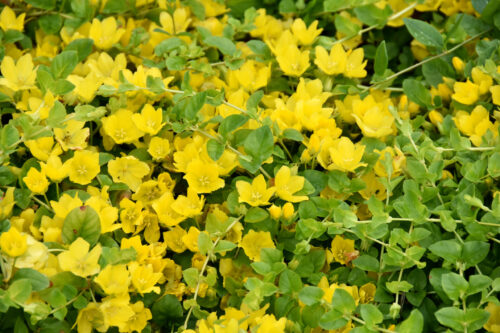
Easy-going and fast-growing, Creeping Jenny is a staple in many American gardens. It gets its nickname “Moneywort” from its small, round, coin-sized evergreen leaves. In May, it lights up with bright yellow blossoms. It’s incredibly versatile—it’s just as happy in the wet soil near a pond as it is in partial shade under trees or tucked into a rock garden. Plus, it’s great for wildlife gardens since it provides a cozy winter hideout for beneficial insects.
++Barrenwort (Epimedium)
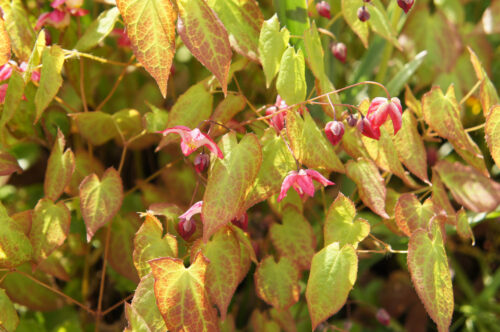
The delicate-looking Barrenwort loves to spread its carpet of leaves and flowers in partially shaded spots. One of the best things about the varieties used as groundcovers is their evergreen foliage, which gets a fresh update when new growth emerges in the spring. The tiny flowers—which can be white, yellow, orange, or red—float on thin, wiry stems. They are champions at suppressing weeds, which is why you’ll often see them planted under shrubs and trees in public parks.
++Ozark Sundrops (Oenothera macrocarpa)
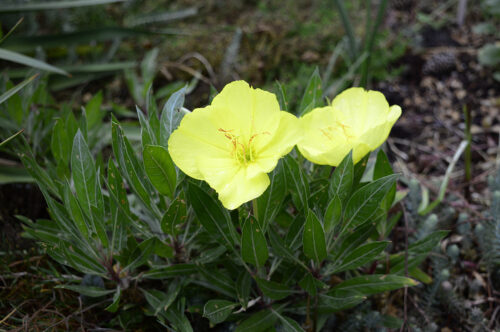
This variety of Evening Primrose stays low, rarely exceeding eight inches in height. It’s a real showstopper that blooms all summer long with large, cup-shaped yellow flowers. It thrives in warm, sunny spots and isn’t picky about soil nutrients. Because it’s drought-tolerant, it’s a fantastic pick for gravel gardens or xeriscaping, and bees absolutely love it.
++Dalmatian Bellflower (Campanula portenschlagiana)
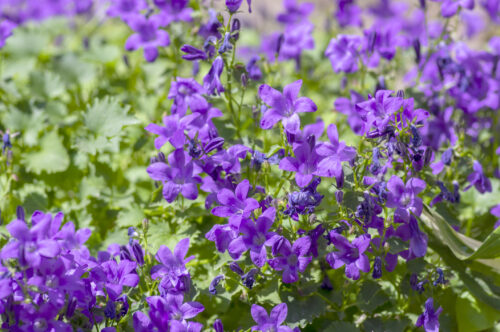
Certain Bellflower species have a creeping habit that creates a thick, lush cushion over time. You can easily spot them by their signature violet-blue, bell-shaped flowers. These perennials prefer soil that is slightly alkaline and not too dry. They look particularly charming as a border for garden beds or spilling over stone walls and stairs, covering hard edges with a sea of purple.
%%Creeping Phlox (Phlox subulata)
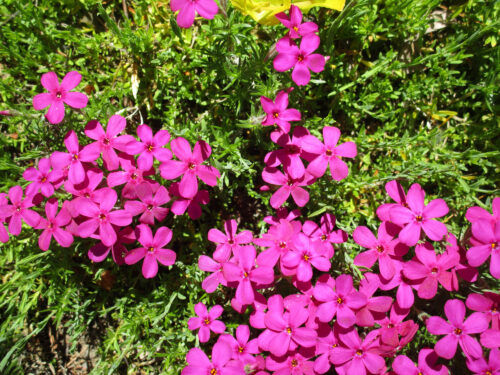
Creeping Phlox is having a major comeback right now, and for good reason. This low-maintenance plant creates a literal carpet of white, pink, red, or purple flowers between April and June that pollinators go crazy for. Even when it’s not blooming, the needle-like, vibrant green foliage looks great. Pro tip: if you give it a quick trim after the first round of flowers fades, it will often reward you with a second flush of blooms!