
If you’ve got a spot in your yard where the grass just won’t grow, or you’re tired of the constant mowing and fertilizing, I’ve got some great news for you. By using hardy, low-profile plants that can handle a bit of foot traffic, you can create a lush, green landscape even in the trickiest spots. Today, I’m sharing seven of the most popular lawn alternatives, plus my personal “pro tip” for a fragrant, durable groundcover.
[[pflanzen]]
++European Wild Ginger (Asarum europaeum)
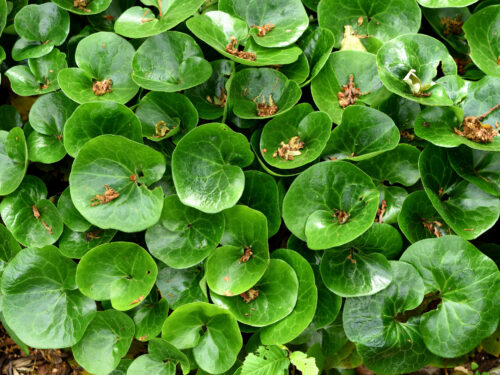
This evergreen groundcover features tough, glossy, dark green leaves that are slightly fuzzy on the underside. Because of their kidney-like shape, some folks call them “little rabbit ears.” Starting in March, you might spot tiny, reddish-purple flowers, though they usually hide away under the dense foliage. Wild Ginger is the perfect lawn substitute for partial to full shade and works beautifully under trees and shrubs. It’s a lifesaver for those dark corners where grass simply refuses to take root.
++Red Dead-Nettle (Lamium purpureum)
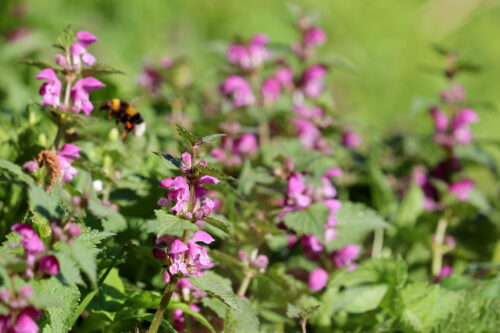
This creeping perennial does great in drier soils and partial shade. Red Dead-Nettle is a “nitrogen indicator,” meaning it thrives in nutrient-rich spots—which is why you’ll often see it growing wild in areas where dogs like to do their business! You can use this to your advantage to green up high-traffic pet areas with very little maintenance. It blooms up to four times a year with purple-pink flowers that bees and other pollinators absolutely love.
++Japanese Spurge (Pachysandra terminalis)
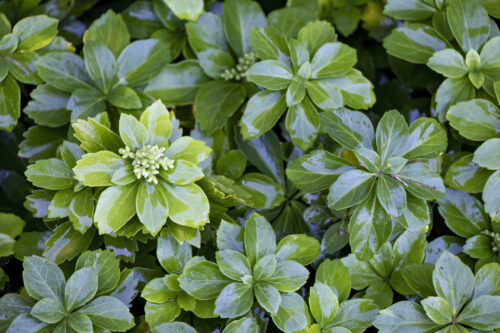
A member of the boxwood family, this groundcover is a classic for a reason. It grows about 6 to 12 inches high and spreads steadily via underground runners (rhizomes). The leathery, serrated leaves are tough enough to handle the occasional step, making it a solid lawn alternative. Pachysandra loves shade, handles city pollution like a champ, and doesn’t mind competing with tree roots for space.
++Rockspray Cotoneaster (Cotoneaster horizontalis)

If you have a large area to cover, the creeping Cotoneaster is a fantastic choice. Its tiny, round, dark green leaves grow so densely that they naturally choke out most weeds. In May and June, the plant is covered in countless white blossoms, which turn into bright red berries by August. Just keep in mind that this one is a sun-lover; it won’t be happy if you tuck it away in the shade.
++Creeping Jenny (Lysimachia nummularia)
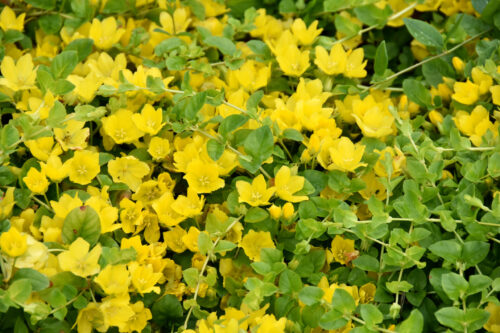
Growing only 2 to 4 inches tall, Creeping Jenny is one of the toughest lawn substitutes out there and can handle light foot traffic. It spreads quickly, forming a carpet-like mat over large areas. The round, lime-green leaves often stay on the plant through mild winters. From May to July, it’s blanketed in bright yellow, coin-shaped flowers. The best part? It’s not picky at all—it grows just as well in full sun as it does in deep shade.
++Irish Moss (Sagina subulata)
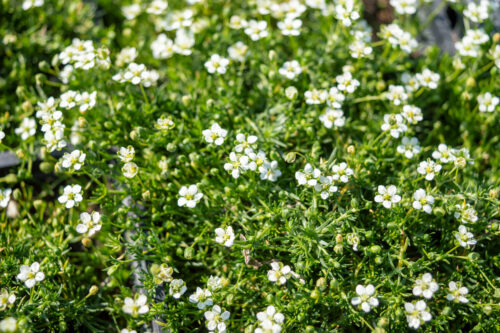
Many gardeners struggle with mossy patches where grass won’t grow, but Irish Moss is a brilliant way to embrace that look. It’s a hardy, cushion-like perennial that can handle being stepped on occasionally without any drama. It stays very low (under 2 inches) and produces a sea of tiny white flowers in late spring. It’s a great solution for shady, damp spots.
++Creeping Thyme (Thymus praecox)
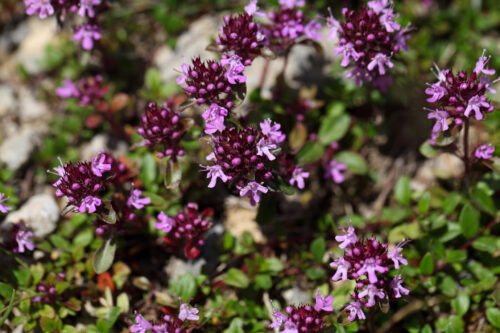
This is a personal favorite! Creeping Thyme creates a fragrant floral carpet that acts like a magnet for bees. It prefers lean, sandy soil and hot, sunny spots. The tiny leaves stay green through the winter on slightly woody stems. Depending on the variety, it blooms in white, pink, or crimson from June to August. It’s incredibly durable and can handle regular walking with ease. Plus, unlike a lawn, the only “mowing” it needs is a quick trim after the flowers fade.
%%Roman Chamomile (Matricaria caucasica)
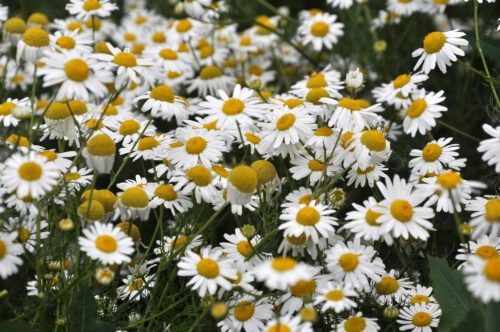
Shakespeare once said, “The more it is trodden on, the faster it grows,” and he was talking about Chamomile! This plant is surprisingly resilient to foot traffic. It features feathery, evergreen leaves similar to the chamomile used for tea, though this variety is grown more for its looks than its scent. From June to September, white daisy-like flowers rise up on long stems. Just make sure to plant it in a sunny spot, as it won’t bloom well in the shade.