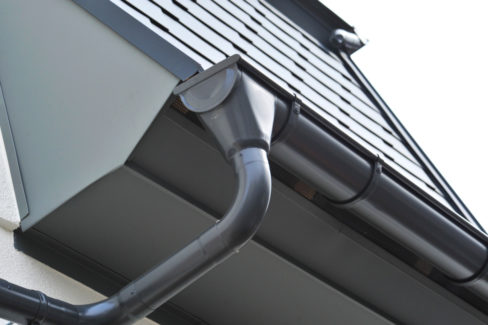
To make sure your gutters can handle a heavy downpour without overflowing, you need to size them correctly based on your roof’s surface area. If they’re too small, you’ll end up with water cascading over the sides, which is a headache for your foundation. To help you get it right, I’ve put together a quick guide on how to calculate the perfect fit for your home.
Gutter Sizes Are Standardized
Just like lumber or PVC pipe, gutters come in standard sizes. This is great news for homeowners because it keeps costs down and makes installation way easier. In the industry, these dimensions are often governed by standards (like EN612 in Europe), ensuring that if you need to repair a section or add an extension years later, the parts will actually fit together.
Generally, gutter sizing depends on the shape of the gutter and the diameter of the downspout. One thing to keep in mind: different manufacturers might use different naming conventions for the same size. For example, you might see these three terms all referring to the exact same size:
- 200mm;
- 10-part; and
- RG 80.
Finding the Right Size for Your Roof
Before you head to the hardware store, you need to do a little math. The “perfect” size for your house depends mostly on two things: your roof’s footprint (the horizontal surface area) and the pitch (the slope). While it’s always a smart move to double-check with a pro or a local contractor to be 100% safe, you can get a solid ballpark estimate using this general logic:
Gutter Size = (Roof Area x Local Rainfall Intensity) / (Roof Pitch x Drainage Factor)
You’ll find plenty of online gutter calculators where you can just plug in your dimensions and get a recommendation. These are super handy for a quick estimate, but treat them as a starting point rather than gospel—every house has its own quirks!
Common Standard Gutter Sizes
Standard sizes are usually categorized by their “girth” (the width of the material before it’s shaped) and the diameter of the downspout. Here are the most common sizes you’ll run into on the market:
| Material Width (mm) | Downspout Diameter (mm) | Standard Size Label | “Part” Designation |
|---|---|---|---|
| 200mm | 80 | RG75 | 10-part |
| 250mm | 105 | RG100 | 8-part |
| 285mm | 127 | RG125 | 7-part |
| 333mm | 153 | RG150 | 6-part |
| 400mm | 192 | N/A | 5-part |
| 500mm | 250 | N/A | 4-part |
While half-round gutters used to be the go-to, many modern homeowners are opting for K-style or boxy, rectangular gutters. Not only do they give the house a sharper, more contemporary look, but they actually tend to hold more water than the old-school rounded versions!