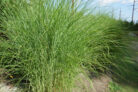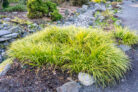
Miscanthus (also known as Maiden Grass or Silvergrass) spreads through rhizomes, which means it grows steadily—if a bit slowly—outward. Once those clumps get too massive, you’ll need to dig them up or thin them out to keep the plant healthy and looking its best.
The Right Tools for the Job
Depending on how big your Miscanthus has grown, you might need some serious muscle. For massive, established clumps, it’s honestly not a bad idea to rent a mini-excavator to save your back.
For smaller clumps, a sturdy spade and a long, sharp knife are your best friends. Sometimes it’s way easier to slice off smaller sections of the root ball one by one rather than trying to tackle the whole thing at once.
Digging Up Your Miscanthus
Before you start digging up your Miscanthus, give the grass a good trim. Leave about 20 inches (50 cm) of height so you have something sturdy to grab onto while you work.
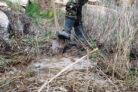
Start by clearing the soil away from the root base. Miscanthus can send roots down several feet, but you mainly want to focus on catching all those thick rhizomes, as they are the culprits behind new growth and spreading. Most of these rhizomes sit fairly close to the surface. Once you’ve cleared the dirt with your spade, a pickaxe is a great tool for breaking off large chunks of the root mass.
If your goal is to get rid of the plant entirely, you have to be thorough. It’s easy to leave small root fragments behind, which can lead to unwanted regrowth. A pro tip: after digging, cover the area with a heavy-duty liner (like a pond liner) for about a year. This smothers any remaining bits and ensures the plant won’t make a comeback.
Transplanting and Maintenance
If you’re planning on replanting pieces of your grass, you should definitely consider a rhizome barrier for your Miscanthus. Using a root barrier makes your life much easier down the road because it keeps the plant’s size in check.
The only trade-off? You’ll have to dig it up and divide it more often. If Miscanthus gets too cramped, it’ll stop thriving and start looking a bit sad. To make things even simpler, many gardeners plant their Silvergrass in large pots and sink those directly into the ground. That way, you can just lift the whole pot out when it’s time for a trim!