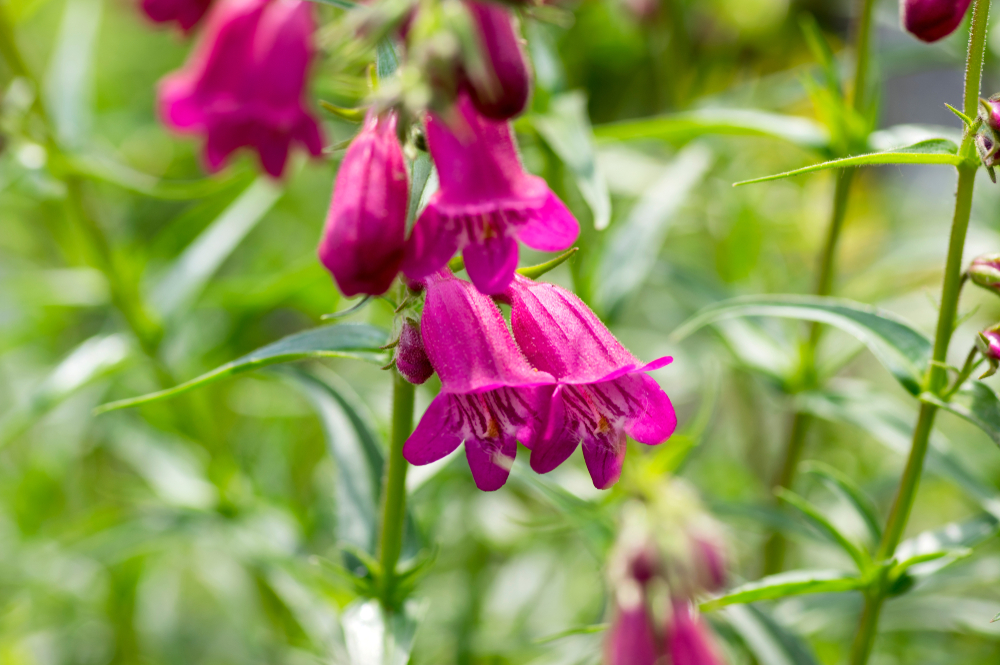
With over 250 different species out there, Penstemon (commonly known as Beardtongue) is a diverse bunch! Because they come from so many different climates, their reaction to frost varies wildly. Some varieties are strictly annuals here in the States, while others are tough enough to stay in your garden beds all winter long—provided you give them a little TLC and the temperatures don’t take a total nosedive.
Caring for Hardy Varieties
One of the best things about Beardtongue is how low-maintenance it is. That easy-going nature extends right into the fall, too. You actually don’t need to worry about pruning your plants before winter hits. In fact, leaving that spent, withered foliage alone helps protect the crown from harsh frosts. For an extra layer of safety, I recommend tossing some brushwood or a thick layer of mulch/leaves over the base of the plants. This outdoor method works best for the real “tough guys” of the Penstemon world, such as:
- Alpine Beardtongue (Penstemon alpinus): Hardy down to -5°F.
- Bush Penstemon (Penstemon fruticosus): Hardy down to -5°F.
- Foxglove Beardtongue (Penstemon digitalis): Hardy down to -5°F.
- Golden-Bearded Penstemon (Penstemon barbatus): Hardy down to -5°F.
Bringing Sensitive Species Indoors
For most of the flashier, more sensitive varieties, gardeners often treat them as annuals—letting them fade at the end of the season and then composting them. However, if you have a favorite plant you’re not ready to say goodbye to, you can definitely move it indoors to overwinter. And here’s some peace of mind for parents and pet owners: Beardtongue is non-toxic, so you don’t have to worry about it being around your curious little ones or furry friends.
The Right Way to Overwinter
If you want to try overwintering your Penstemon indoors, start by carefully digging up the root ball in the fall, making sure to get as much of it as possible, and transplanting it into a pot. Your plants will be happiest in a spot that is bright but cool. An unheated greenhouse or a sunroom is perfect. If you don’t have those, a cool basement or even a spot under a stairwell can work just fine to keep them dormant until spring!