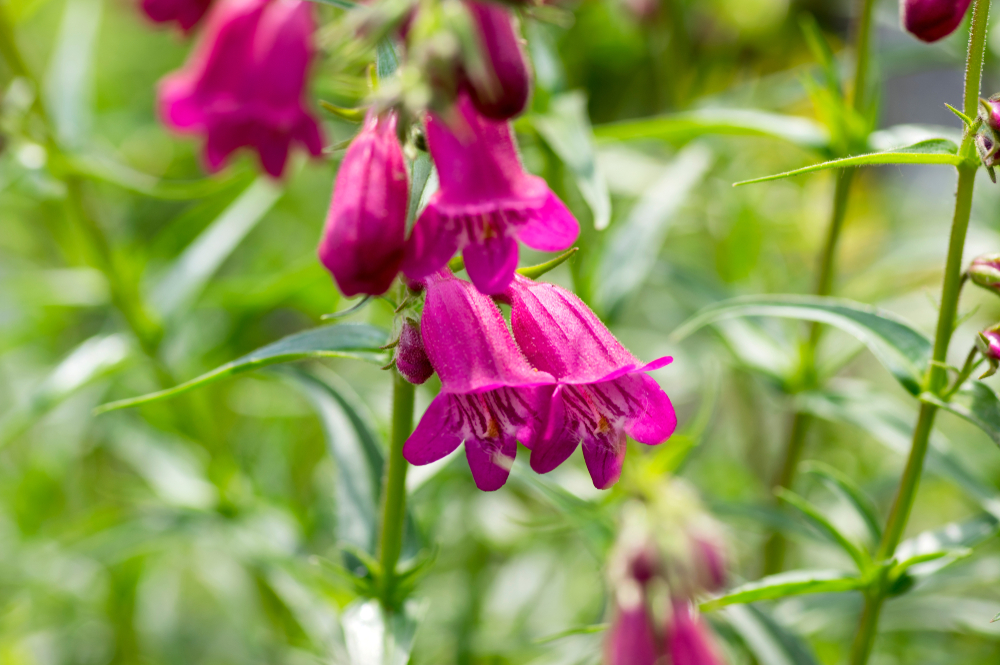
Originally native to North and Central America, the Beardtongue (Penstemon) is a diverse bunch. With over 250 species out there, some are totally used to freezing winters, while others will throw in the towel the moment the first frost hits. Because they vary so much, how you prep them for the cold season depends entirely on which variety you’re growing.
Handling the Hardier Varieties
The winter-hardy types of Beardtongue can stay right in your garden beds all season long. These tough plants can handle temperatures dropping as low as minus 4 degrees Fahrenheit (-20°C). The golden rule here? Don’t prune them in the fall! If you cut them back, you’re removing the withered foliage that naturally protects the crown from frost. Instead, give them a little extra love in late autumn by layering some fallen leaves and brushwood around the base to beef up that protective mulch. Here are a few varieties that are particularly cold-resistant:
- Alpine Beardtongue (Penstemon alpinus)
- Bush Penstemon (Penstemon fruticosus)
- Foxglove Beardtongue (Penstemon digitalis)
- Golden-Bearded Penstemon (Penstemon barbatus)
Moving Sensitive Plants Indoors
If you’re growing frost-sensitive varieties, you have a choice: let them die back in late autumn, or dig them up to save them for next year. If you choose to save them, try to be gentle with the root ball as you lift them. You don’t need any fancy potting soil for this—just a standard container will do. The best spot for them to spend the winter is somewhere bright and cool. Unheated sunrooms or greenhouses are perfect. If you don’t have either, a cool basement usually does the trick just fine.
Low-Maintenance Winter Care
One great thing about bringing these plants inside is that you don’t have to worry about the kids or the dog—Beardtongue is not poisonous. They are incredibly low-maintenance during their “off-season.” You can skip the fertilizer entirely until spring. When it comes to watering, less is definitely more. Just give them a tiny bit of water every now and then to keep the soil from drying out completely, and they’ll be ready to bounce back when the weather warms up.