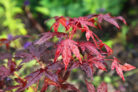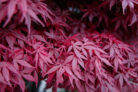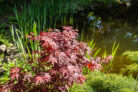
Did you notice your Japanese Maple leaves feeling a bit tacky lately? If your tree suddenly has sticky leaves, you’re likely dealing with a common garden party crasher: aphids. Read on to find out exactly what that sticky stuff is and how you can kick those pests to the curb.
What’s making my Japanese Maple leaves so sticky?
That sticky residue is actually something called honeydew. Don’t let the sweet name fool you—it’s not sap from your Japanese Maple. It’s actually the waste produced by aphids as they feed on your tree. If you have a major infestation, you might notice ants and other insects hanging around, too, since they love to snack on that sugary honeydew.
How do I get rid of the stickiness on my Japanese Maple?
The best way to clear up those leaves is to tackle the aphids directly using insecticidal soap (or a simple DIY soft soap mix). Once you eliminate the source of the problem, your leaves can get back to their healthy, beautiful selves. Here’s how to mix up a batch at home:
- Dissolve about 3 tablespoons (50 grams) of pure liquid castile soap or soft soap (no additives!) in 1 quart of hot water.
- Mix in 2 teaspoons of rubbing alcohol.
- Let the mixture cool down completely.
- Pour it into a spray bottle.
- Thoroughly spray the affected areas of your maple several times over a few days.
Is there a natural way to prevent sticky leaves?
You can actually use tea tree oil to keep aphids at bay. If you make life uncomfortable for these little pests early on, they’ll usually move along before your Japanese Maple ends up covered in honeydew. Here’s the recipe:
- Warm up one quart of water.
- Add about 20 drops of tea tree oil (check the label if buying from a garden center).
- Once the solution is cool, pour it into a spray bottle.
- Mist the branches and foliage of your tree regularly.
Are sticky leaves bad for my Japanese Maple?
Yes, it’s more than just a cosmetic issue. That sticky coating can actually block photosynthesis and create a breeding ground for sooty mold. In severe cases, it can even stunt your tree’s growth. You definitely don’t want to leave a sticky maple to fend for itself, as a weakened tree is more susceptible to diseases like Verticillium wilt.
Quick Tip: Use Nettle Tea as a Fertilizer!
Fertilizing with a natural stinging nettle tea (or “jauche”) is a fantastic way to strengthen your tree from the inside out. If you give your Acer a boost with this in the spring, it’ll be much more resilient against aphids, helping you avoid those sticky leaves altogether!