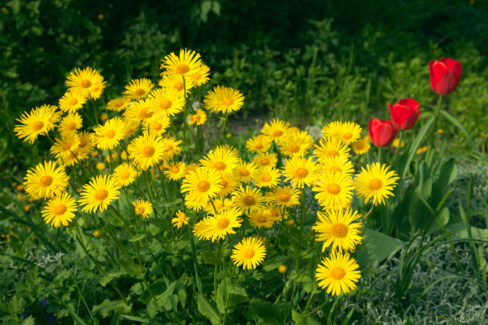
In April, most of the garden is still rubbing the sleep out of its eyes, but the Leopard’s Bane (Doronicum) is a total early bird. Its cheerful, bright yellow blooms usually pop up as early as April. If yours isn’t showing off yet, it might be a sign that it’s not totally happy with its current spot in your yard.
Partial Shade is the Sweet Spot
Getting the lighting right is key for a happy Leopard’s Bane. Generally, these plants are happiest in partial shade. They can handle full sun too, but they definitely aren’t fans of deep, dark shade—they’ll just pout and won’t bloom well there.
Low-Maintenance Soil Needs
Unlike a lot of other showy bloomers, Leopard’s Bane isn’t a “hungry” plant that needs tons of fertilizer. It actually thrives in lime-rich soil. It doesn’t mind a bit of clay, as long as the ground drains well. You definitely want to avoid “wet feet”—standing water can lead to root rot pretty quickly.
Give It Some Elbow Room
Leopard’s Bane likes to spread out rather than grow tall. This makes it a fantastic ground cover that turns into a glowing yellow carpet during its blooming season in April and May. Since it naturally expands over the years, make sure you pick a spot where it has plenty of room to stretch its legs.
Don’t Forget to Divide
As the plant spreads wider and wider, it starts putting more energy into its roots and less into those gorgeous flowers. To keep it looking fresh, you should divide the plant every three to four years. This “rejuvenation” trick gives the plant a second wind so it can bloom intensely again. Just dig it up and carefully split it into sections with your spade.
Here’s why dividing is a win-win:
- You get way more flowers.
- It keeps the plant young and healthy.
- You get “free” new plants to move elsewhere!