Mugwort is one of those classic herbs you’ll often spot growing wild, but it’s also a fantastic addition to your own backyard herb garden. While its flowers might not win any beauty pageants, they play a huge role in how the herb tastes. In fact, every little bud that opens changes the flavor profile of the plant.
When Does Mugwort Bloom?
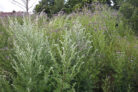
Mugwort (scientifically known as *Artemisia vulgaris*) spends pretty much the entire summer covered in blossoms. Depending on your local climate, here’s what to expect:
- Blooming can start as early as the beginning of June.
- The peak flowering season usually runs from July through September.
- In particularly warm years, you might even see blooms sticking around into October.
What the Flowers Look Like
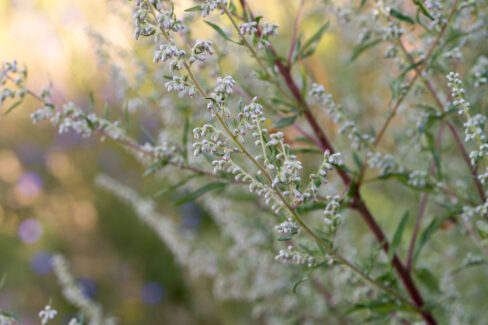
The upper tips of mugwort’s branched stems are packed with tiny flowers. Because there are so many of them, the individual blooms are miniature. Here are a few more details to help you identify them:
- They are “composite” flowers (flower heads).
- They consist of numerous tiny tubular florets.
- Unlike daisies, they don’t have ray florets (the “petals” we usually see).
- The flowers grow in panicles (loose, branching clusters).
- Each flower is tiny—only about 2-3 mm wide and 2.5 to 4 mm high.
- They start out a grayish-white and eventually turn yellowish or even a reddish-pink.
- The bracts (the little leaves under the flower) have a fuzzy, felt-like texture.
Mugwort looks a lot like its cousin, Wormwood, which also has a bitter flavor profile. Since they bloom at the same time, it’s easy for beginners to mix them up. Don’t worry, though—Wormwood isn’t toxic and is used in very similar ways, so a little mix-up in your harvest isn’t a disaster.
The Connection Between Blooming and Harvesting
If you’re foraging or harvesting from your garden, timing is everything. Mugwort is at its peak flavor right *before* the flower buds open. Once the flowers start blooming, the plant ramps up its bitterness to ward off hungry animals. While fresh herbs are usually best, you really want to harvest mugwort during this “sweet spot” window; otherwise, the flavor can become so intense that it overpowers your dish.
Pro Tip:
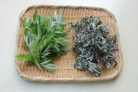
If you end up with a bigger harvest than you can use right away, you should definitely dry the herb for later. Dried mugwort is great for seasoning, making tea, or even as an herbal smudge for incense.
A Heads-Up for Allergy Sufferers
Mugwort isn’t prickly and it isn’t poisonous, so you don’t need gloves to handle it. However, during its blooming phase, it produces a massive amount of pollen. If you’re prone to hay fever or seasonal allergies, be careful—mugwort pollen is a common trigger for allergic reactions.