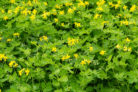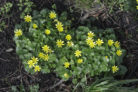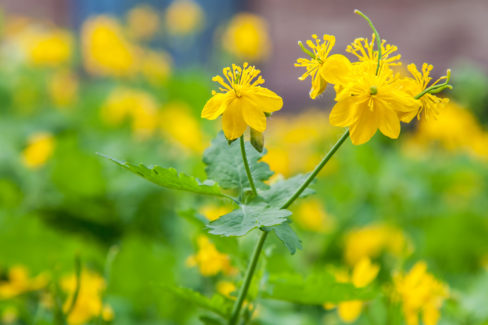
You’ll often spot Greater Celandine (Schöllkraut) brightening up the edges of woodlands or tucked away along riverbanks. When it’s in full swing, it creates a gorgeous sea of tiny, vibrant yellow flowers that stick around all summer long.
Celandine is a Summer Staple
Greater Celandine is a true summer bloomer, showing off its golden petals throughout the warmest months of the year. You’ll usually see the first flowers pop open around April, and they often keep going until October. The cool thing is that they don’t all bloom at once; instead, the plant is constantly cycling through, with older flowers fading away as fresh buds open up. This steady growth keeps the plant looking lush and full of life for months on end.
Identifying the Flowers
With their bright yellow hue, Celandine flowers can look a lot like St. John’s Wort at first glance. But if you take a closer look, you’ll see the difference: each Celandine bloom has exactly four petals and a cluster of tiny stamens in the center.
During its blooming season, it’s incredibly easy to spot this plant out in the wild. It loves spots that get a mix of sun and shade with nice, moist soil. Keep an eye out for it in places like:
- Thinly wooded areas and forest edges
- Near the banks of rivers and streams
- Along old stone walls or growing right out of the cracks
- Near anthills (more on that in a second!)
Don’t Deadhead Those Faded Blooms
Once the flowers fade, they turn into seed pods. If you want the plant to stick around, resist the urge to tidy up! These pods are essential for the plant to self-seed and spread naturally. Plus, the tiny seeds are a favorite snack for ants. As the ants carry the seeds around, they actually help “plant” them in new spots throughout your garden.
If you’re looking to grow your Celandine patch or just keep it thriving, leave those withered flowers alone. It’s a great way to support your local ants and other helpful garden insects.
A Word of Caution: Handle with Care
It’s important to remember that all parts of the Greater Celandine plant are toxic. You might have heard of it as a traditional remedy for warts when used topically, or as a herbal treatment for stomach issues due to its anti-inflammatory and pain-relieving properties.
However, you have to be extremely careful. Ingesting too much can lead to nasty symptoms like nausea, vomiting, or even liver damage. In extreme cases, it can be fatal. Always treat this beauty with respect and keep it away from kids and pets!