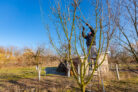
Pear trees come in all sorts of shapes and sizes, and while those compact spindle trees are super popular right now, there’s a lot to be said for the classic “half-standard” (or semi-standard) tree. If you’ve got the space, it’s a rewarding addition to any home orchard. Let’s dive into what makes these trees special.
What Exactly is a Half-Standard?
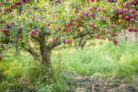
In the gardening world, we call a tree a “half-standard” when the trunk is clear for about 4 to 5 feet (1.20–1.60 meters) before the first branches start to form the canopy. Because these pears are usually grafted onto vigorous seedling rootstocks, they grow up to be quite sturdy, eventually reaching heights of 20 to 25 feet. You’ll want to give them plenty of elbow room—aim for about 20 to 25 feet of space between trees.
The Perks of Going Big
One of the best things about a half-standard is its stability. Thanks to a deep root system , these trees stand their ground even when the wind starts howling. Plus, since the branches start higher up, it’s a breeze to mow the grass or tend to the soil underneath.
When it comes to the harvest, these big trees are overachievers, providing a massive amount of fruit. Another cool pro-tip? You can actually graft multiple varieties onto one large tree. This is great for ensuring cross-pollination and giving you a staggered harvest of different pears all season long.
A Few Things to Consider
Patience is definitely a virtue here. Unlike dwarf varieties, half-standards take a bit longer to settle in; it might be four years before you see a significant harvest. In the beginning, the tree puts all its energy into growing tall rather than making fruit wood, so don’t be surprised if there are few blossoms early on.
Once those juicy pears do arrive, you’re going to need a sturdy ladder. The sunniest, sweetest fruit always seems to grow right at the very top! You’ll also need that ladder for routine maintenance like pruning or keeping an eye out for pests . Dealing with diseases or fungal issues can be a bit more of a workout on a tree this size. Because of their scale, these trees are really best suited for larger backyards or open meadows.
Great Varieties to Try
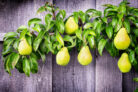
Most of your favorite pears are available as half-standards. Here are a few tasty options that do particularly well:
Gute Luise (Louise Bonne)
A vigorous grower with incredibly juicy fruit. When they’re perfectly ripe, they have a lovely hint of melon in the flavor.
Conference
This is a classic for a reason. It’s a reliable producer of delicious pears that store exceptionally well, so you can enjoy them long after picking.
Williams Christ (Bartlett)
Known for its iconic aroma and slightly tangy flavor, this pear is a superstar whether you’re eating it fresh off the branch or canning it for the winter.
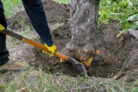
Quick Tip: Make sure you double-check your spacing before you dig that hole! Once a half-standard gets established, moving it is a major headache.