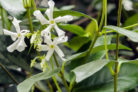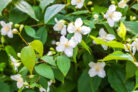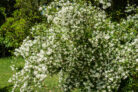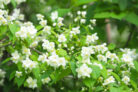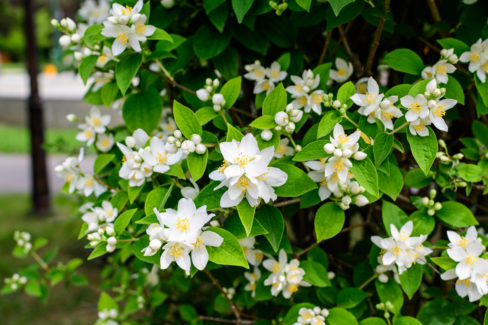
Unlike its cousin, True Jasmine, Mock Orange (often called False Jasmine) is happiest when it’s planted outdoors. To make sure your Mock Orange thrives and shows off those beautiful blooms all year long, I’ve put together a few tips to get you started.
The Best Time to Plant
Generally speaking, the best time to get your Mock Orange in the ground is during the spring or fall. Most garden centers sell them in containers or with root balls, which means you can actually plant them almost any time of year—as long as the ground isn’t frozen solid!
A Quick Tip for Young Plants
If you decide to plant in the autumn, keep in mind that young plants have shallow root systems that are still getting established. To keep them cozy, give them a nice “blanket” of mulch to protect those tender roots from the winter frost.
Finding the Perfect Spot
Mock Orange loves the same kind of location as True Jasmine. Ideally, you want a spot that is bright and sunny. It can handle a bit of partial shade, but you’ll want to avoid deep, dark corners of the garden. As long as you keep it well-watered, this hardy shrub can even handle direct, intense midday sun without a problem.
Soil Requirements
You’ll want soil that is nice and loose and packed with nutrients. Most standard garden soil does the trick just fine. The big thing to watch out for is drainage—make sure the water doesn’t pool! Mock Orange roots hate “wet feet,” and sitting in stagnant water can quickly lead to root rot.
How to Plant Your Mock Orange
Ready to get digging? Here’s a quick step-by-step to get your shrub settled in:
- Dig a hole at your chosen spot that is about twice as wide and deep as the root ball.
- If your soil needs a little boost, toss some compost or expanded clay pebbles into the bottom of the hole before setting the plant inside.
- Fill the hole back in with soil, gently press down on the top layer to remove air pockets, and give it a very generous watering.
Bad Neighbors to Avoid
For the most part, Mock Orange plays well with others and fits right in with most garden shrubs. However, there are a couple of “bad neighbors” you should avoid planting nearby. Keep it away from:
- European Spindle (Pfaffenhütchen)
- Common Snowball Bush (Viburnum opulus)
These specific plants are magnets for Black Bean Aphids. These pests love to hop over to the Mock Orange in the summer, which can really do a number on your beautiful shrub.