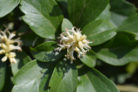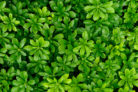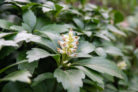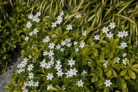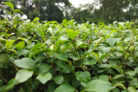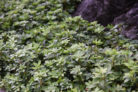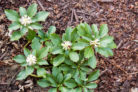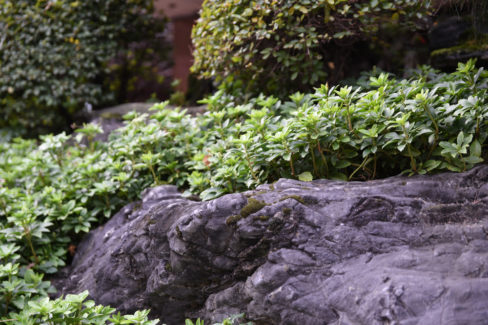
Japanese Spurge (bot. *Pachysandra terminalis*) is one of those low-growing, spreading groundcovers that’s a total lifesaver for those tricky shady spots under trees and shrubs. A member of the Boxwood family, this hardy little plant originally hails from the damp, misty forests of Japan and China.
The Perfect Spot
Pachysandra (or “Ysander,” as some call it) absolutely loves the shade. It’s the perfect solution for the bare ground under large trees. One of the coolest things about using it as a groundcover? It can “swallow” a ton of fallen leaves in the autumn. The leaves just tuck themselves between the plants, break down, and act as a natural fertilizer.
Beyond the backyard, you’ll often see Japanese Spurge used in parks to keep maintenance low on shaded slopes. It’s also a classic choice for cemetery plantings under tree canopies. Just a heads-up: keep it out of the direct sun! Too much sunlight will turn those beautiful green leaves a sickly yellow.
Soil Requirements
Pachysandra thrives in loose, slightly acidic soil that isn’t too heavy on lime or nutrients. You want to keep the soil consistently moist, but definitely not waterlogged. If your soil doesn’t drain well, I’d recommend laying down a layer of coarse gravel for drainage before you plant. If you can’t do the whole area, at least add some drainage to each individual planting hole.
How to Plant
If you’re ready to green up your shady spots, spring or fall are the best times to get your Pachysandra in the ground. Here’s how to do it:
- Start by loosening up the soil really well.
- Give the soil a boost by mixing in some compost or horn meal.
- Map out your area—you’ll want about nine to twelve plants per square yard to get good coverage.
- Dig your planting holes.
- Add that coarse gravel for drainage if your soil is heavy.
- Space the plants about 12 inches apart.
- Set your young plants in, tuck them in with soil, and give them a good soak.
Ongoing Care
If the location is right, your Japanese Spurge will settle in quickly and start spreading. Since it actually prefers soil that isn’t overly rich, you don’t need to worry about regular fertilizing. As long as the soil stays naturally moist, you won’t need to water much either—except during those scorching, dry summer stretches. In those cases, give them a regular drink. For the most part, you don’t even need to prune Pachysandra. But, if it starts getting a little too tall for your liking, you can easily trim it back with a pair of hedge shears.