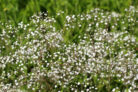
If you’re looking to add more Baby’s Breath (Latin name: *Gypsophila paniculata*) to your garden, you’re in luck! There are a few different ways to propagate this airy favorite. Dividing your plants in the spring is a popular choice, though I should warn you—it doesn’t work perfectly for every single variety. You can also try your hand at taking cuttings or starting from seed. Not sure which route to take? Let’s break down how to do each one so you can find the method that’s perfect for your green thumb.
Propagating Baby’s Breath by Division
Dividing Baby’s Breath is a tried-and-true method, but it does take a little bit of know-how and a gentle touch. It’s not always a guaranteed success, but here’s the best way to tackle it:
- Carefully divide the roots. Be extra cautious here! The fleshy parts of the root system can be surprisingly tough, and you don’t want to nick your fingers.
- Take your root cuttings (the pieces you’ve separated).
- On the end that was closest to the “mother” plant, make a clean, straight horizontal cut.
- On the other end of the root piece, make a diagonal (slanted) cut.
- Plant the root piece with the slanted side facing down into a pot filled with nutrient-poor starter soil.
- Sprinkle a little sand over the top and mist everything with some lukewarm water.
Once you see those first little leaves starting to sprout, you can transplant your new babies into the garden. Just remember, they’re a bit sensitive in those first few weeks, so keep them out of harsh, direct midday sun while they get established.
Propagating Baby’s Breath from Cuttings
For this method, you’ll want to take cuttings in the spring. Look for healthy stems and cut pieces about 4 to 6 inches long, making sure each one has at least three pairs of leaves.
Here’s the game plan:
- Snip the cutting just below a leaf node and strip off any leaves on the bottom half of the stem.
- Place the cuttings into a starter pot with lean (low-nutrient) soil and give them a light watering.
- Find a bright, sunny spot for the pot to call home.
Once the young plants have developed a solid root system, they’re ready to head outdoors. Just a heads-up: go easy on the watering! Baby’s Breath hates “wet feet,” and too much moisture can lead to rot pretty quickly.
Propagating Baby’s Breath from Seed
Most gardeners stick to seeds for the colorful annual varieties, but it actually works for the perennial types too. You can sow the seeds in containers or go straight into your garden beds. If you’re planting directly outside, the best window is anytime from March through June.