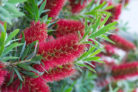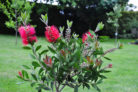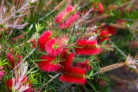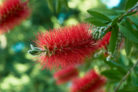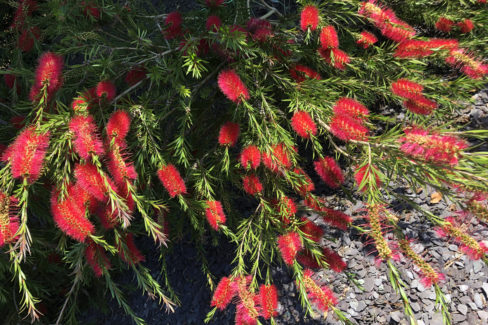
The Bottlebrush plant is a total showstopper, thanks to those unique cylindrical blooms and that vibrant, “look-at-me” red color. It’s no wonder so many gardeners want to grow more of them! If you’ve fallen in love with this plant, the good news is that you can definitely propagate it at home.
Two Ways to Grow Your Bottlebrush Family
Since this plant hails from Australia, it has some unique quirks. Theoretically, you have two ways to get the job done. However, as you’ll see in a moment, one method is a bit more… intense than the other. Here’s the breakdown:
- Cuttings
- Seeds
Quick Tip:
Bottlebrush plants grown from cuttings usually bloom much more readily than those grown from seed. If you’re looking for those iconic red flowers sooner rather than later, cuttings are definitely the way to go!
Propagating from Cuttings
Because the Bottlebrush is an evergreen, you can technically take cuttings year-round. That said, there are two “sweet spots” for success. The first window is February to March, while your non-hardy plant is still overwintering indoors. The second window is August to September, which is perfect if you’re already pruning the plant anyway.
- Cut tip cuttings about 4 inches (10 cm) long.
- Choose stems that don’t have any flowers on them.
- Strip off the lower leaves.
- Place them in small pots (about 3 inches wide).
- Use a low-nutrient seed-starting mix.
- Cover with a plastic bag or humidity dome (but remember to vent it daily!).
- Keep them at 65–68°F (18–20°C) to encourage rooting.
- Place them in a bright spot, but keep them out of direct sunlight.
- Keep the soil consistently moist.
Be patient! It usually takes 6 to 8 weeks before you see new growth, which is the signal that roots have successfully formed. Once they’ve taken hold, fertilize your “babies” every 14 days and repot as needed. Just remember: they should only be outside from mid-May through September.
Growing from Seed
The Bottlebrush produces very hard seed capsules. In the Australian wild, it actually takes the heat of a bushfire to crack these pods open so the tiny seeds can germinate. To do this at home, you’ll have to stage a controlled “mini-bushfire”—usually with a candle flame.
- Carefully hold the seed capsules over a flame until they pop open.
- Sow the tiny seeds in the spring.
- Use seed-starting mix and cover them only very lightly with soil.
- Place them in a bright spot at around 60°F (15°C) to germinate.