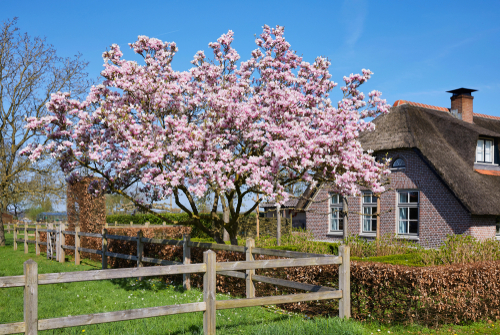
When autumn rolls around, most of us start heading out to the yard to prep our plants for the big winter sleep. For a lot of shrubs, that means a good pruning session—but hold your horses when it comes to your magnolia! Taking the shears to a magnolia can actually backfire if you aren’t careful.
Less is More
The golden rule for magnolias is to only prune when it’s absolutely necessary. These beauties are long-lived and take years to develop their signature, elegant shape. Unlike some other garden favorites, regular hacking won’t actually encourage more flowers or better growth. In fact, there are really only two reasons (and two specific times) to prune a magnolia:
- A structural prune in the spring to help shape the canopy.
- A maintenance prune in late summer or very early fall to keep its size in check.
Thinning Out the Canopy
If you’re planning an autumn trim, timing is everything—the earlier, the better. Ideally, you want to get this done in late summer. If you wait too long, you run a huge risk of accidentally cutting off next year’s flower buds, which most magnolia varieties have already started forming by then. Usually, the only reason to prune this late in the season is if your magnolia tree or hedge has simply gotten too tall or wide for its space. In that case, a light shaping can help steer it back in the right direction for your garden layout.
How to Do It Right
When you need to remove long, old branches, make sure to take them off completely. You’ll want to cut right at the “branch collar” (that slightly swollen area where the branch meets the trunk). My best advice? Be as conservative as possible. Sometimes, instead of cutting a branch off entirely, you can gently train or bend a younger side branch to grow in a better direction. After every single cut, take a few steps back and look at the whole tree. Ask yourself: “Do I really need to cut more?” The more gentle you are with your pruning, the happier and healthier your magnolia will be next spring.