Magnolias have found a home in so many of our backyards, and it’s pretty obvious why: those stunning, show-stopping blooms. Most of us expect to see them pop up in early spring, but did you know that some varieties take their sweet time, waiting until June or even July to show off? There are even a few overachievers that will bloom twice in a single season!
When Do Magnolias Bloom?
Depending on the variety, those gorgeous pink, white, or purple flowers will make their debut at different times throughout the spring and summer. Here’s a quick cheat sheet:
- Southern Magnolia (Magnolia grandiflora) – White blooms – May to August
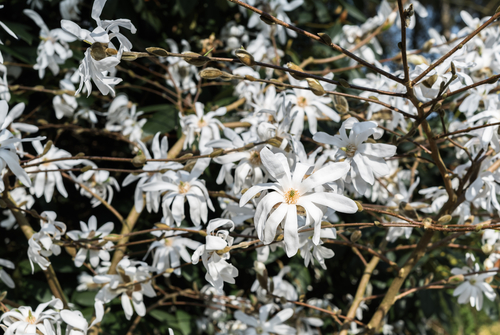
- Star Magnolia (Magnolia stellata) – White blooms – March
- Cucumber Tree (Magnolia acuminata) – Yellow blooms – May to June
- Oyama Magnolia (Magnolia sieboldii) – White blooms – June to July
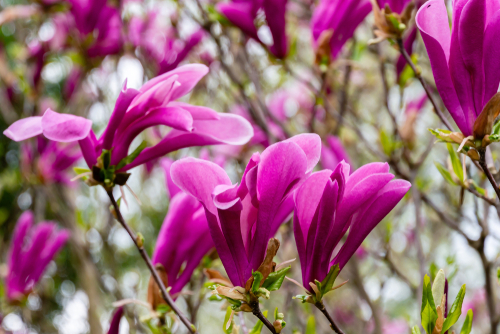
- Lily Magnolia (Magnolia liliiflora) – Purple blooms – May
- Umbrella Magnolia (Magnolia tripetala) – White blooms – April to May
On average, you can expect a magnolia’s flowering period to last about 14 days.
A Second Act in August
While some species are late bloomers by nature, a few special varieties can actually bloom a second time in August. To get that bonus round of flowers, you need a little bit of luck with the weather—specifically a very early, mild spring—and some top-notch care. If the conditions are just right, the tree has enough energy to recharge and put on a second show. This “reblooming” is most common with the Lily Magnolia and the Saucer Magnolia.
Skip the Fall Pruning
With many garden plants, a good hard prune in the fall or early spring encourages a burst of new flowers. But heads up: magnolias are the exception to that rule! These trees are “slow and steady” growers. If you prune them back too hard, they’ll redirect all their energy into healing and regenerating their branches rather than producing those beautiful buds. To keep the flowers coming, it’s best to put the shears away and let them grow naturally.