Every plant has its own little personality and specific needs. To make sure your Miscanthus (also known as Chinese Silver Grass or Maiden Grass) feels right at home and really thrives in your garden, you’ll want to keep these three things in mind:
- Plenty of light
- The right soil
- Enough elbow room
Finding the Sunny Spot
Miscanthus growth is at its best when it’s soaking up the sun. While it can handle a bit of partial shade, too much darkness will definitely stunt its growth and keep those beautiful plumes from blooming. For the happiest grass, pick the sunniest spot in your yard.
Getting the Soil Just Right
For the most part, Miscanthus isn’t too picky about dirt. However, it does have a “Goldilocks” preference: not too dry, but definitely not soggy. It won’t survive in swampy conditions. Ideally, you want soil that stays slightly moist but drains well. A nutrient-rich, loamy soil is the dream scenario. Here’s how to prep your ground like a pro:
- Prevent “wet feet” (standing water)
- Prep your planting mix
- Check and adjust the pH level
Prevent Standing Water
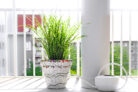
Miscanthus absolutely hates sitting in stagnant water—it’s a one-way ticket to root rot. Make sure excess water has a place to go. If your soil is heavy, you might want to install some drainage or mix in grit before planting. This is especially important if you’re growing your grass in containers!
Prep Your Planting Mix
Giving your soil a little TLC before planting makes a huge difference. In its first few years, Miscanthus can get bullied by weeds, so clear out any unwanted growth and old roots first.
To help the soil hold just the right amount of moisture, mix in some peat or well-aged compost. Adding compost is also a great way to give sandy soil some much-needed body. On the flip side, if you’re dealing with heavy clay, mix in some sand or fine gravel to loosen things up.
Check and Adjust the pH Level
This grass is happiest with a neutral pH between 5 and 8. If you want to be precise, you can grab a simple soil test kit at any garden center. If your soil is too acidic (low pH), a little lime will do the trick. If you need to bring the pH down, mixing in some used coffee grounds is a great organic hack.
Give It Some Space
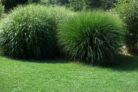
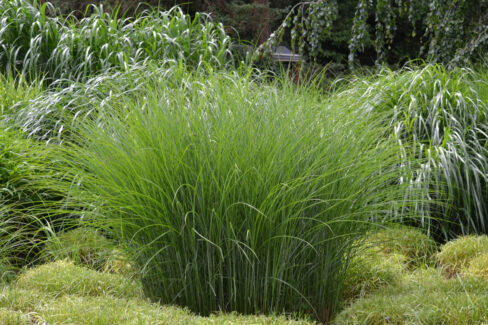
Depending on which variety you choose, you’ll need to space your plants anywhere from 12 to 60 inches apart. Because Miscanthus has such a gorgeous, architectural shape, it looks stunning as a standalone “statement” plant. However, it also plays well with others! For a really spectacular late-season show, try pairing it with other fall-blooming perennials.