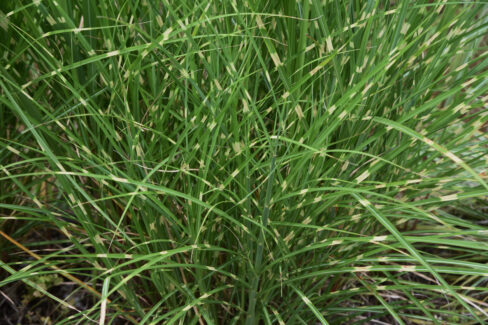
If you’ve already got some beautiful Miscanthus (commonly known as Maiden Grass or Silvergrass) growing in your yard, there’s no need to run to the nursery to get more. You can easily propagate your own plants at home! Here are the best ways to do it:
- Root division
- Separating rhizomes
- Growing from seed
Root Division
Dividing the roots is one of the most effective ways to get more Miscanthus. While it takes a little bit of muscle, it’s actually great for the plant because it helps rejuvenate older clumps. Plus, the new plants will be identical to the original, which is perfect if you’re trying to create a uniform look—like when you’re planting a privacy hedge.
To divide your grass, wait until spring after you’ve pruned it back. Dig up the entire root ball and use a sharp spade to slice it right down the middle. You can even split those halves again if the plant is big enough. Just make sure each new section is at least the size of your fist. Then, simply replant the pieces with plenty of space to grow.
Separating Rhizomes
Rhizomes are underground stems that grow horizontally, and they are fantastic for propagation. In some plants, these runners spread out quite a bit from the main clump. Keep in mind that not all Miscanthus varieties produce strong rhizomes, so this method depends on which specific type you have in your garden.
For this to work, you’ll need a rhizome piece that has at least two buds on it. Here’s the game plan:
- Carefully dig around the plant to find the rhizomes.
- Cut a section away from the main plant.
- Plant it in its new home about 3 inches deep. You can also start these in pots if you prefer.
- Give it a good drink of water and keep the soil consistently moist while it establishes.
Growing from Seed
Using your own seeds to grow Miscanthus is a bit of a gamble and isn’t done as often. Not every variety produces seeds that will actually sprout, and germination can be a little finicky. But if you’re feeling adventurous, give it a shot! Harvest the seeds in late summer and sow them in seed trays the following spring. Once the danger of frost has passed and the seedlings are strong enough, you can move them out into the garden.
Timing is Everything
No matter which method you choose, spring is the absolute best time to propagate. This gives your new Miscanthus plenty of time to establish a strong root system and grow big and tall before the winter chill sets in.