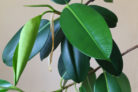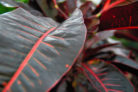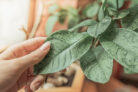
If you take good care of your Rubber Tree (*Ficus elastica*), you usually won’t have to worry much about pests. But every now and then, some uninvited guests might decide to move in and cause some trouble. One of the most common troublemakers you’ll run into is the spider mite.
Species and Lifestyle
There are actually about 1,200 different species in the spider mite family (*Tetranychidae*). On a Rubber Tree, you’re most likely dealing with the “Two-Spotted Spider Mite” (*Tetranychus urticae*). These little guys absolutely love plants with hardy, leathery leaves like our friend the Ficus.
These pests are tiny—we’re talking 0.02 inches (0.6 mm) max. But don’t let their size fool you; they reproduce like crazy. A single female can lay 50 to 100 eggs, and most of those hatch into more females. It usually takes about 10 to 30 days for a new generation to fully mature, but if the conditions are just right, they can go from egg to adult in just one week!
When Do They Show Up?
Spider mites live for hot, dry weather. That’s why you’ll usually see them popping up:
- During the winter when the indoor heating dries out the air.
- During hot, dry spells in the summer (even if your Rubber Tree is spending the season outside).
Even though they love the heat, these critters are surprisingly tough. The females can actually survive temperatures as low as 5 degrees Fahrenheit (-15°C)!
Signs of Damage
Spider mites survive by sucking the sugary sap right out of your plant. To get their fill, a single mite can puncture a leaf 18 to 22 times per minute. Here is what you should look out for:
- At first, you’ll see lots of tiny, pale or whitish spots on the leaves.
- Eventually, the leaves will turn brown and start falling off.
If the infestation has really taken hold, you’ll notice:
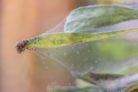
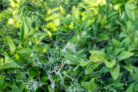
- Fine, white webbing on the leaves, tips of the stems, or where the leaves meet the stem.
- Tiny pale dots caught in those webs.
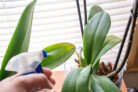
Pro tip: If you aren’t sure if you have mites, give your Rubber Tree a light misting with water. The droplets will cling to the webs—which the mites use for protection—making them much easier to see.
How to Get Rid of Them
Spider mites aren’t shy about moving to your other houseplants, so the first thing you should do is isolate your Ficus. The best weapon against these pests is moisture, because they absolutely hate it. Here is a simple DIY method:
- Give your Rubber Tree a good “shower” with a strong stream of water to knock the mites off.
- Wrap the plant in a clear plastic bag to create a mini greenhouse.
- Leave the bag on for about a week.
The high humidity trapped inside the bag should finish them off. If your Rubber Tree is too big to bag up, don’t sweat it—you can find plenty of natural, organic pest control sprays at your local garden center that will do the trick.