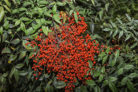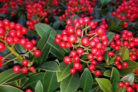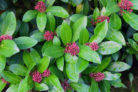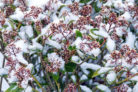
With this plant, the berries are just as valuable as the blooms—if not more so! While our gardens are bursting with flowers and lush greenery during the summer, very few plants can compete with the Skimmia when it comes to adding a pop of vibrant color to the dreary winter months.
Only Female Plants Bear Fruit
When it comes to Skimmia (scientifically known as *Skimmia japonica*), things get a little interesting. Some plants produce only female flowers, while others produce only male ones. In garden centers, you’ll usually see them labeled as “Fruit Skimmia” or “Flowering Skimmia.” However, if you’re looking for the best of both worlds, there are now self-pollinating varieties available that grow both types of flowers on a single plant.
Here’s the catch: only female flowers can turn into those gorgeous berries. Because of this, many gardeners actually prune away the male flowers—which, unlike the scentless female ones, have a lovely, heady fragrance—during the annual pruning session to make room for the fruit to develop.
What the Berries Look Like
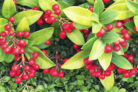
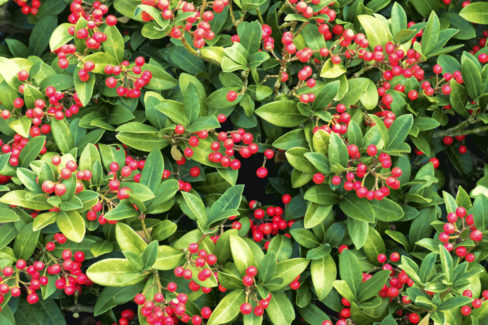
Skimmia berries are real showstoppers because they usually grow in thick, brightly colored clusters. Here’s a quick rundown of what to look for:
- Berries grow in dense clusters (called panicles).
- The fruit is round to egg-shaped (technically a drupe).
- They measure between 1/4 and 1/2 inch (6 to 12 mm) in diameter.
- The skin is smooth and glossy.
- Depending on the variety, they are usually bright red, but you can also find pink or even near-black versions.
- Each berry contains one seed per chamber (usually 1 to 5 chambers).
A quick heads-up:
Those bright red berries might look tasty, but don’t let them fool you! They contain alkaloids and are mildly toxic to humans, so keep them away from curious kiddos.
How to Get a Bumper Crop of Berries
Skimmia can be a bit picky about its living conditions. If it’s not happy, you’ll notice yellow leaves, or it might skip its blooming phase altogether. No flowers mean no berries come autumn! To keep your plant happy and productive, keep these tips in mind:
- Pick a bright spot, but keep it out of direct, scorching sunlight.
- Use slightly acidic soil (aim for a pH between 5 and 6).
- Fertilize regularly during the growing season.
- Keep watering well into the fall.
- Make sure you have both male and female plants nearby for pollination.
- Alternatively, choose a hermaphroditic (self-fertile) variety.
- And most importantly: don’t prune off the female flower heads!