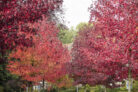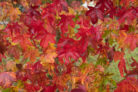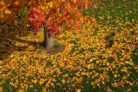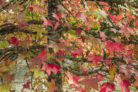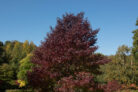
Throughout the summer, the Sweetgum tree (Liquidambar) is a bit of an underdog—it’s a stately, handsome tree, but it mostly stays in the background. It’s almost as if it’s saving up all its energy for its big autumn debut. In reality, though, that famous color change is just the tree’s way of packing up its chlorophyll and getting ready for winter.
A Show-Stopping Autumn Display
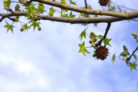
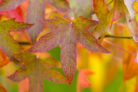
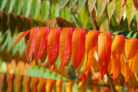
Sweetgum leaves have a beautiful star-shaped, palmate look that often gets them confused with Maples. While there are only about 15 species found worldwide, breeders have developed tons of cultivars specifically selected for their stunning fall foliage.
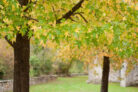
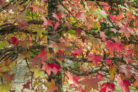
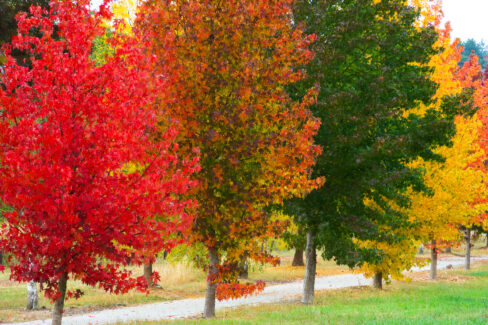
Beyond the usual autumn palette of yellows, oranges, and reds, the Sweetgum brings something extra to the table: deep purples and violets. What’s really cool is the color play you’ll see on a single tree—sometimes a single leaf will even sport multiple hues at once! Most often, though, you’ll see a gorgeous gradient that starts with deep reds and fades into a brilliant, glowing yellow.
Getting Ready for Winter
Starting in September, the leaves aren’t the only things changing; this is also when the fruits ripen and begin to drop. Fun fact: only the “gumballs” that fall naturally to the ground contain viable seeds, though if you’re looking to grow your own, taking cuttings is usually a much more reliable bet. This ripening process, along with the changing leaves, marks the beginning of the tree’s winter dormancy.
Technically, the tree isn’t “turning” a new color in the fall; it’s actually just losing its green. Since there isn’t enough sunlight in winter to keep photosynthesis going, keeping those leaves green would just be a waste of energy. The tree stops producing chlorophyll (the green pigment), which finally allows the vibrant reds and yellows—which were there all along—to finally take center stage.
Location, Location, Location
If you want your Sweetgum to put on the best possible show, you’ve got to give it a spot in full sun. It also looks its best when planted as a “specimen tree”—meaning it has plenty of space to stand alone and be the star of the yard. Make sure the soil stays moderately moist and try to pick a spot protected from harsh winds. If it’s too breezy, the tree might drop its leaves prematurely, and your autumn color show will be over before it even starts!