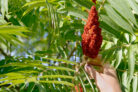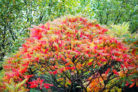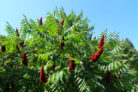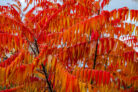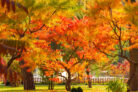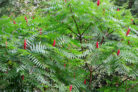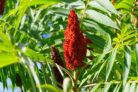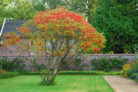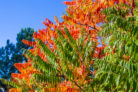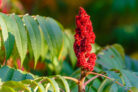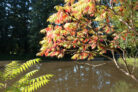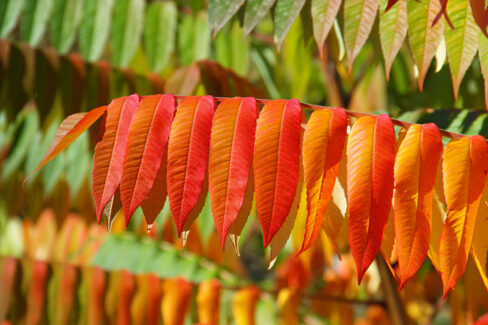
The real star of the show when it comes to the Staghorn Sumac is definitely its foliage. These aren’t just your average leaves; they are made up of delicate leaflets that put on a world-class performance every fall. As the season changes, the shrub transforms into a glowing masterpiece of yellow, orange, and green.
Appearance
The leaves of the Staghorn Sumac (botanically known as *Rhus typhina*) grow in an alternating pattern along the stems. They’re quite impressive in size, reaching anywhere from 8 to 24 inches long, and consist of a petiole (the leaf stalk) and the leaf blade itself.
The leaf stalks are usually 2 to 4 inches long and can range in color from green to a reddish hue. You’ll also notice they are covered in soft hairs that can be short or long, giving them a velvety feel.
The leaf blade is “pinnately compound,” meaning it has leaflets arranged in pairs along the stem with one single leaflet at the very tip. Each leaf can have anywhere from 9 to 31 leaflets. Here’s a quick breakdown of what those individual leaflets look like:
- Length: 3 to 5 inches
- Width: About 1 inch
- Shape: Oval, elliptical, or long and lance-like
- Base: Rounded to slightly heart-shaped
- Edges: Unevenly toothed or serrated, with a smooth tip
Fall Color
Before the big autumn reveal, the leaflets have:
- A shiny green top surface
- A matte, pale green underside
Once fall hits, the Staghorn Sumac really starts to show off. The leaves transition first to a bright yellow, then shift into a deep orange. By October, the whole plant usually glows in a brilliant crimson red.
The Role of Soil and Weather
The intensity of that fall color isn’t just luck—it depends a lot on your soil and the weather. You’ll get the most “wow” factor if your sumac is planted in:
- Sandy soil
- Low-lime (acidic) soil
- Well-draining soil
Dry weather also helps pump up the color intensity. On the flip side, if you have heavy, clay-like soil, the fall display might be a bit more muted.
Varieties
If you’re looking for a specific look, there are a few cultivars that offer unique twists on the classic foliage and fall colors:
Rhus typhina “Dissecta” (Cutleaf Sumac)
- Features deeply “shredded” or cut leaves.
- The foliage looks very similar to fern fronds.
- Often called the Fernleaf Sumac.
Rhus typhina “Laciniata”
- Known for an incredibly intense red color in the fall.
- Produces bright scarlet fruit clusters.
- You might also find this one sold as *Rhus glabra* “Laciniata.”
Rhus typhina “Tiger Eyes”
- This one is a color-changing champion!
- You’ll often see multiple colors at once: lime green, bright gold, and orange-yellow, finishing with a fiery red right before the leaves drop.
- The narrow leaflets have deeply serrated edges that look a bit like tiger stripes—hence the name!