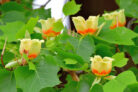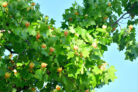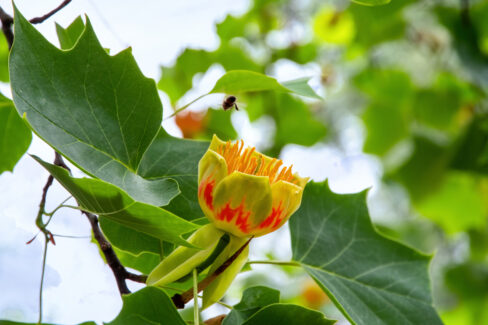
The Tulip Tree gets its name for a pretty obvious reason—its stunning flowers look just like garden tulips! I’ve put together a quick guide with everything you need to know about these unique blooms.
What Do Tulip Tree Flowers Actually Look Like?
First off, there’s often a bit of a “name game” when people talk about tulip trees. Depending on who you ask, they might be referring to one of three different plants:
- The American Tulip Tree (lat. Liriodendron tulipifera)
- The Saucer Magnolia (lat. Magnolia X soulangeana)
- The African Tulip Tree (lat. Spathodea campanulata)
In the gardening world, the “true” Tulip Tree is the American variety. You’ll often hear people call the Saucer Magnolia a tulip tree by mistake, but they’re actually only distant cousins. The African Tulip Tree is a totally different species with its own look and care needs. However, all three share one thing in common: blossoms that look remarkably like tulips.
On the American Tulip Tree, you’ll first notice green, oval buds pointing straight up toward the sky. When they open, they form a bell shape with a beautiful yellow-orange hue. These trees are hermaphroditic, meaning each individual flower contains both male (stamens) and female (pistils) parts right in the center.
When Does the Tulip Tree Bloom?
If you’ve just planted one, you’re going to need a little patience! A Tulip Tree usually won’t bloom for the first time until it’s at least 15 years old. In some cases, it can even take up to 30 years to see that first flower. So, don’t panic if your tree isn’t blooming in its early years. As the tree matures, the floral display will get more vibrant and impressive every season.
Depending on the local weather, the blooming season typically kicks off in April or May. The outlier here is the African Tulip Tree; since it’s usually grown as an indoor container plant in cooler climates, it can actually bloom almost year-round.
Are the Fruits Edible After the Flowers Fade?
Short answer: No. The entire Tulip Tree is considered toxic to both humans and pets, so the fruits are definitely not for snacking. If someone (or a furry friend) accidentally ingests any part of the tree, it’s best to contact a doctor or vet right away.
While you can’t eat them, the fruits usually contain two seeds each, which you can use if you’re interested in propagating your own Tulip Tree!