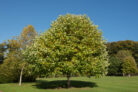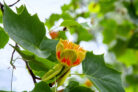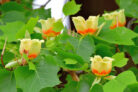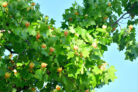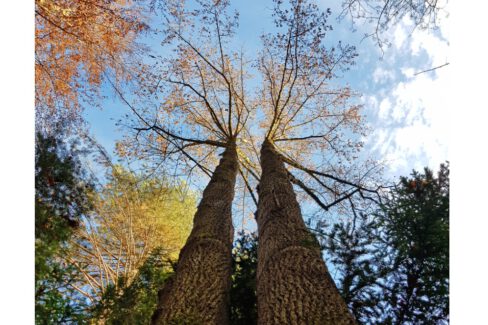
The Tulip Tree is a true giant of the forest. It features a stunning pyramidal crown that tapers beautifully at the top. I’ve rounded up all the essential facts about its growth habits and even included some smaller alternatives if you’re working with a more modest backyard.
How Tall Does a Tulip Tree Get?
Depending on whether you’re talking about the “true” Tulip Tree or one of its look-alikes, the growth rate and size can vary quite a bit. Usually, when people mention a tulip tree, they are talking about one of these three:
- American Tulip Tree (lat. Liriodendron tulipifera)
- Saucer Magnolia (lat. Magnolia X soulangeana)
- African Tulip Tree (lat. Spathodea campanulata)
The American Tulip Tree is the “real deal.” However, because the other two have blooms that look remarkably like tulips, they often get lumped into the same category.
Growth Habits of the American Tulip Tree
In its natural habitat, the American Tulip Tree can reach a massive 130 feet in height and spread about 65 feet wide. Because of its pyramidal shape, it’s widest at the bottom and narrows as it goes up. Under the right conditions, this fast-grower can add up to 2 feet of new growth every single year!
Growth Habits of the Saucer Magnolia
The Saucer Magnolia is often called a “Tulip Tree” by mistake, and it’s actually only a distant relative of the American variety. It usually tops out at around 25 to 30 feet, making it a fantastic alternative if the true Tulip Tree is just too big for your landscape.
Growth Habits of the African Tulip Tree
The African Tulip Tree belongs to a completely different genus. It reaches a maximum height of about 25 feet. While it’s often kept as a houseplant in cooler climates, it can thrive outdoors in warmer regions and takes up significantly less space than its American cousin.
Can You Influence How a Tulip Tree Grows?
You can give your tree a great head start by picking the perfect planting spot. Beyond that, keeping up with a little TLC—like the right fertilizer and occasional pruning—will keep it happy. It’s also a good idea to keep an eye out for diseases or pests, as these can stunt its growth and stress the tree out.