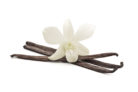
Vanilla is the ultimate secret ingredient for so many of our favorite desserts, but did you know those fragrant beans actually come from an orchid? It’s true! However, growing your own vanilla is a bit of a race against time. The flowers on a vanilla orchid only open for a single day. If they aren’t pollinated in that tiny window, the bloom drops off, and your chance at a homegrown vanilla bean is gone until next time.
The Vanilla Orchid Blooms in Summer
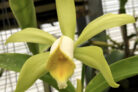
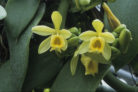
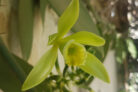
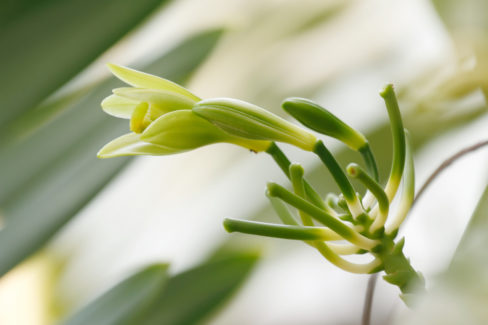
If you’ve started your vanilla orchid from a cutting, pack your patience—it usually takes about three to four years before you’ll see that first bloom. When they finally arrive, the flowers are a lovely greenish-yellow or creamy pale yellow. They grow in small clusters on short stems and stay relatively petite. Here’s a quick breakdown of what to expect from the blooms:
- You’ll see 10 to 20 individual flowers growing on flower spikes about 2 to 3 inches long.
- These spikes are slightly angled and curved.
- The outer petals and the ovary measure between 1.5 to 2.5 inches.
- The “lip” of the flower reaches about 1.5 to 2 inches in length.
- Vanilla flowers are hermaphroditic (meaning they have both male and female parts).
- However, the male and female components are separated by a thin membrane.
- Fertilization can only happen while the flower is fully open.
- Each individual bud opens for just one day.
During the summer, the buds in a cluster will open one by one. This usually happens in the early morning or by mid-morning at the latest. By the time evening rolls around, the flower will wilt and fall off. If you want a vanilla bean, pollination has to happen during those few hours the flower is open. If you’re successful, a long, yellow pod will develop over the next six to nine months. Inside, you’ll find those tiny black seeds and the oily, vanillin-rich liquid we all love.
Pollination Takes a Steady Hand
Unless you happen to have specific tropical bees or hummingbirds hanging out in your greenhouse, you’re going to have to play Mother Nature yourself. Since the natural pollinators aren’t around, you’ll need to manually transfer the pollen using a small, pointed tool like a toothpick or a thin skewer. It takes a little bit of finesse, but it’s the only way to get those coveted beans!