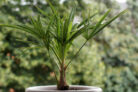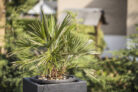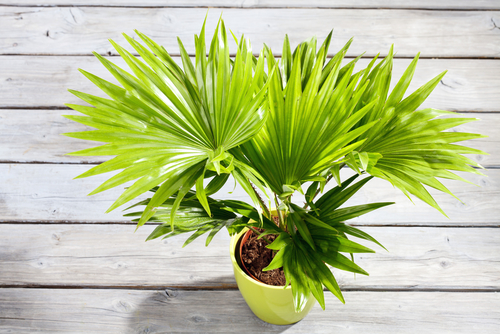
Whether you’ve got yours planted in the backyard or chilling in a pot on the patio, watering a Windmill Palm takes a little bit of a “Goldilocks” touch. These fan palms are a bit picky—they hate having soggy feet, but they definitely don’t want to go bone-dry either.
Quick Tips for Watering Your Windmill Palm
- Windmill Palms cannot handle standing water (wet feet).
- Never let the soil dry out completely.
- They aren’t fans of “hard” tap water.
- If kept indoors, give them a regular misting with filtered water.
- Consistency is key: water regularly, but don’t overdo it.
How and When to Water
The goal is to keep your palm hydrated without drowning it. To figure out if it’s time for a drink, use the “thumb test.” Stick your thumb into the soil—if the top inch or so feels dry, it’s time to grab the watering can.
If your palm is in a pot, make sure to dump out any excess water from the saucer immediately so the roots aren’t sitting in a puddle. Better yet, if your potted palm lives outside on the deck, skip the saucer entirely so rainwater can drain away freely.
For palms planted in the ground, it’s a great idea to mix some sand or fine gravel into the soil. This helps with drainage, ensuring rainwater flows past the roots instead of pooling around them.
Stick to Soft Water
Windmill Palms are sensitive to lime and minerals found in hard water, so straight tap water isn’t the best choice. If you can, use rainwater from a rain barrel—your palm will thank you!
Give Indoor Palms a Spa Day
These palms love humidity to stay lush and green. Since indoor air tends to be pretty dry, you might notice brown leaf tips starting to form. To prevent this, give your palm a regular misting with a spray bottle to boost the moisture in the air around it.
Don’t Forget Winter Watering
When you’re overwintering your Windmill Palm, don’t put the watering can away for the season! Even though the plant grows much slower during the darker winter months, it still needs a steady supply of hydration to stay healthy.