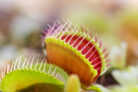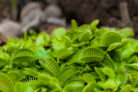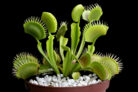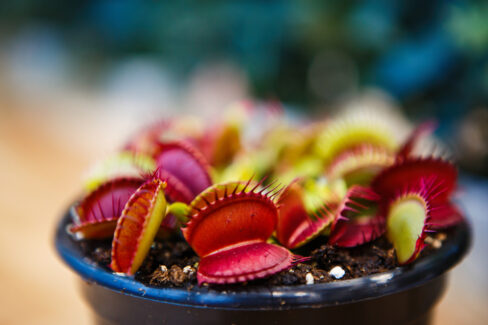
If you’ve recently added a *Dionaea muscipula* to your plant collection, you probably already know it’s not your average houseplant. These little carnivores have some pretty specific quirks when it comes to hydration. To keep your Venus flytrap happy and healthy, you’ll need to follow a few ground rules. Here’s everything you need to know about watering your flytrap the right way!
The Basics: What Your Venus Flytrap Craves
When it comes to watering, Venus flytraps are a bit high-maintenance. Here’s the “cheat sheet” for their favorite conditions:
- Keep the soil consistently moist.
- Avoid waterlogging at all costs (nobody likes soggy feet!).
- Never water the plant from above.
- Use the “tray method” (bottom watering) instead.
- Stick strictly to rainwater whenever possible.
How to Water Your Venus Flytrap Like a Pro
Caring for a Venus flytrap can be a bit of a balancing act. These plants are native to the boggy wetlands of the Carolinas, so they love a sunny, hot spot. While they need their soil to stay damp, they can’t handle sitting in stagnant, swampy water for too long. To get the balance just right, skip the watering can and use the tray method. Here’s how to do it:
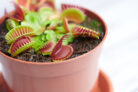
- Grab a saucer or a shallow tray to place under your pot.
- Instead of pouring water onto the soil, fill the saucer with about half an inch to an inch of water.
- Set the pot inside the saucer so the soil can wick up the moisture.
- Once the water has been completely absorbed (usually after a couple of days), wait a day or two and then refill the saucer.
- Pro tip: Give your plant a light misting every now and then with a spray bottle to help boost the humidity.
Choosing the Right Water
This is the most important rule: Never use tap water! Most tap water is way too “hard” (full of lime and minerals) for these sensitive plants. Rainwater is the gold standard here—it’s exactly what they get in the wild. If you’re in a pinch and don’t have any rainwater saved up, you can use still mineral water. While some people use distilled water, it’s not always the best long-term choice because it lacks the trace minerals the plant needs for healthy growth. Stick to the fresh stuff from the sky whenever you can!