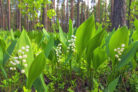
Wild garlic and Lily of the Valley look incredibly similar at first glance. And honestly, that’s exactly where things can get dangerous for an inexperienced forager. While wild garlic (also known as ramps or ramsons) draws us in with its delicious, savory aroma, Lily of the Valley is packing a serious punch of toxins.
How to Tell the Difference: A Quick Guide
The most important thing to remember is that one is a kitchen staple and the other is highly poisonous. As romantic as those little white bells of the Lily of the Valley look, they are toxic enough to cause severe illness or, in extreme cases, even be fatal. Since you can’t see “edible” or “poisonous” just by looking at the color, you need to check these specific features to stay safe:
- Growth and blooming periods
- Leaves
- Stems
- Buds and flowers
- Scent
Timing is Everything: Growth and Bloom Cycles
Wild garlic is the early bird here, showing off both its leaves and flowers first. Lily of the Valley usually follows a few weeks later. You can start foraging wild garlic leaves from March to April, though some early sprouts pop up as early as February. Lily of the Valley doesn’t usually wake up from its winter nap until mid-April.
By the time May rolls around, wild garlic is usually finishing up its bloom. May is the peak season for Lily of the Valley, but because nature doesn’t always follow a strict calendar, their seasons can definitely overlap in April.
Leaves and Stems
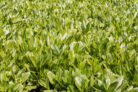
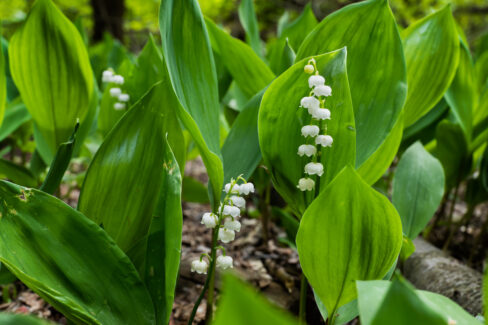
Here is a pro tip: look at how they grow. Lily of the Valley leaves are shiny and usually grow in pairs on a single stem. Wild garlic leaves, on the other hand, are a matte green, and every single leaf has its own distinct, individual stalk. While the leaf shapes are very similar (wild garlic is just a tiny bit narrower), the stems are a dead giveaway: Lily of the Valley has a round stem, while wild garlic has a triangular one.
Buds and Flowers
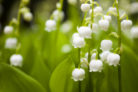
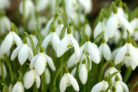
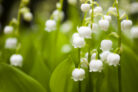
Both plants have white flowers, but that’s where the similarities end. Wild garlic grows in a starburst-like cluster (an umbel) made of many tiny individual flowers. Before they open, you’ll see a single, longish bud. Lily of the Valley flowers look exactly like their name suggests—tiny white bells hanging in a row along the stem.
By the way, don’t toss those unopened wild garlic buds! They are totally edible and delicious. You can pickle them in vinegar or oil just like capers.
Quick Tip:
If you stumble upon a patch of wild garlic that’s already in full bloom, mark the spot for next year so you don’t miss the harvest! Wild garlic pesto is amazing because you can freeze it or can it to enjoy all year long.
The “Sniff Test”
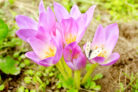
The garlic-like aroma we all love is your best friend when foraging. If you rub a leaf between your fingers and it releases that unmistakable garlic scent, you’ve found the right plant. If there’s no garlic smell, drop it—it’s likely Lily of the Valley. If that happens, make sure to wash your hands immediately. Just a heads-up: wild garlic can also be confused with Meadow Saffron (Autumn Crocus), which is also toxic and—you guessed it—doesn’t smell like garlic either.