title: Spring Showdown: How to Tell Spring Snowflakes and Lilies of the Valley Apart
Both the Spring Snowflake and the Lily of the Valley are iconic harbingers of spring. At first glance, these two white-flowering beauties look pretty similar, but if you look a little closer, there are some key differences that set them apart.
The Botanical Basics
Believe it or not, these two don’t even belong to the same plant family! The Spring Snowflake is part of the Amaryllis family, while the Lily of the Valley is actually a member of the Asparagus family. Unlike the Spring Snowflake and the Snowdrop, the Lily of the Valley doesn’t grow from a bulb—it actually spreads through underground stems called rhizomes.
They also have different favorite spots in the wild. Spring Snowflakes love damp, shady areas, often popping up near rivers and streams. On the other hand, Lilies of the Valley prefer the slightly drier soil of deciduous forests and open meadows.
The Battle of the Blooms
Both plants feature those charming, white, bell-shaped flowers. In fact, in some places, the Spring Snowflake is even nicknamed the “March Bell.” However, there are a few dead giveaways to help you tell them apart.
Timing is Everything
The easiest way to tell them apart? Check the calendar! Since they bloom at different times, you usually won’t see them out at once. The Spring Snowflake blooms early, typically from February to April. The Lily of the Valley, true to its name, waits until May to make its debut.
Flower Details
If you look at the stems and the petals, the differences become even clearer:
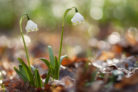
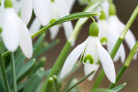
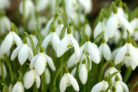
- The Spring Snowflake usually has only one or two flowers per stem.
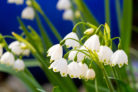
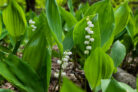
- The Lily of the Valley is much more “crowded,” boasting anywhere from five to 17 tiny bells on a single stalk.
- Look at the tips: Spring Snowflake petals have a distinct little yellow or green dot at the very end.
- Lily of the Valley bells are pure, solid white all the way through.
Check the Leaves
The foliage is another great clue for your garden detective work:
- Spring Snowflake leaves are long, narrow, and grass-like.
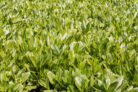
- Lily of the Valley leaves are much broader and oval-shaped.
A Word of Caution: Both are Toxic
One very important thing they have in common is that they are both highly poisonous. Every single part of these plants is toxic, so make sure they stay far away from the dinner table (and keep an eye on curious pets!).
Protecting Our Wild Flowers
Finally, both of these plants share a protected status. While you can absolutely plant them in your own backyard, wild versions are increasingly rare and are often protected by law. In many areas, while you might be allowed to pick a small bouquet of wild Lily of the Valley, digging them up is a big no-no. Let’s keep our wild spaces beautiful!