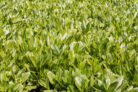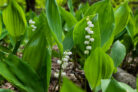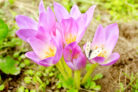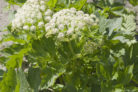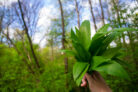
One of the biggest risks when foraging for wild garlic (also known as ramps or ramsons) is accidentally picking a poisonous look-alike. The tricky part is that toxic plants, like Lily of the Valley, love the exact same shady, damp spots where wild garlic thrives. But don’t worry—there are a few foolproof ways to identify wild garlic so you can harvest with confidence.
Don’t rely on the “sniff test” alone
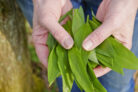
If you’re walking through a patch of wild garlic, that unmistakable onion-like scent is everywhere. While the smell is a huge giveaway, it’s actually not the most reliable way to identify individual plants. The aroma is so strong that once you crush a single leaf, the scent sticks to your fingers for a long time.
If you pick up a different leaf later to check it, your hands will already smell like garlic, making the new leaf smell like it, too—even if it’s toxic! That’s why you shouldn’t trust your nose alone.
Spotting the difference with visual cues
Depending on how warm the spring is, wild garlic season can start as early as late March, with the first leaves popping up by April. At this early stage, the biggest danger is the poisonous Cuckoo Pint (Arum maculatum), which looks incredibly similar to wild garlic when it first sprouts.
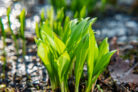
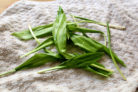
Since early-season wild garlic is the most flavorful and perfect for eating raw, you need to be able to tell them apart. Here’s the trick: wild garlic leaves are shiny and bright green on top but matte (dull) on the bottom. Cuckoo Pint leaves, on the other hand, are shiny on both sides.
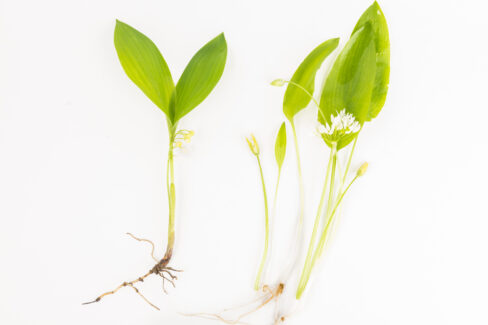
You might also find wild garlic growing near wild snowdrops or daffodils. Fortunately, the risk of confusion here is pretty low because wild garlic leaves are much wider. Unlike those spring flowers, a wild garlic leaf narrows at the base into a distinct, thin, angular stem.
Study the “imposters”
Wherever wild garlic grows, you’re almost guaranteed to find at least one toxic look-alike nearby. As the season progresses, the Lily of the Valley becomes the main concern. You can tell them apart by the stem: Lily of the Valley has a perfectly round stem, and its leaves are a duller green on both sides.
To really master the art of foraging, I recommend going out and specifically looking for these “imposters” in your local woods. Besides Lily of the Valley, keep an eye out for Meadow Saffron (Autumn Crocus). Both are extremely dangerous, and mistaking them for wild garlic can unfortunately be fatal.
By learning to identify the toxic plants first, you’ll become much more confident in spotting the real deal.
Act fast if you suspect poisoning
Always double-check every single leaf before you eat it. If you have even a tiny bit of doubt about a leaf, toss it out—it’s not worth the risk! If you do accidentally eat the wrong plant and start feeling nauseous, vomiting, or having severe stomach pain, don’t wait. Get to a doctor or the emergency room immediately. When it comes to plant poisoning, every minute counts in preventing serious organ damage or worse.