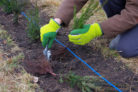
To make sure your willow tree really thrives in your backyard, there are a few key things to keep in mind right from the start. Here’s the lowdown on where to plant your willow and how to get it in the ground properly. Follow these tips to give your new tree the best possible start in its new home.
Choosing the Perfect Spot for Your Willow
Willows are famous for being fast growers, pushing out tons of beautiful, lush foliage. But to keep up that pace, they need a lot of support from their environment—specifically, plenty of moisture and a steady supply of nutrients.
Ideally, you’ll want to plant your willow near a water source, like a pond or stream, so the roots can drink up whenever they need to. If you don’t have a water feature, don’t sweat it! You’ll just need to be diligent about watering during those dry summer spells. To keep the soil rich, you can add a little fertilizer, though the tree actually helps itself out by dropping leaves that decompose and feed the soil naturally.
The third “must-have” for a happy willow is plenty of sunlight. Sun is the engine for the tree’s metabolism, so avoid planting it in a shady corner. If other plants are starting to crowd it out or block the sun, give them a quick trim to let the light through.
The ideal soil for a willow looks like this:
- Neutral to slightly acidic pH
- Consistently moist ground
- Nutrient-rich soil or substrate
Prepping the Planting Hole the Right Way
To help those roots settle in and get established, you’ll need to do a little prep work. Dig a hole that’s nice and roomy—aim for about twice the size of the young tree’s root ball. It’s also a good idea to loosen up the soil at the planting site so the roots can push through easily.
One thing to keep in mind: willow roots love to travel. If you’re worried about them spreading too far, you can install a root barrier. Just make sure it’s not so restrictive that it chokes the tree’s growth. Once you’re ready, set the tree in the hole, fill it back up with soil, and give it a very generous watering.
Caring for Your Willow Long-Term
Keep a close eye on your newly planted willow and make sure it stays well-hydrated. However, watch out for standing water or “wet feet.” If the soil gets waterlogged, the roots can rot, which makes it impossible for the tree to take up the nutrients it needs.
A pro tip? Spread some bark mulch over the willow’s root zone. Mulch is great because it acts like a sponge, holding onto water and nutrients and releasing them slowly over time. Plus, it breaks down into even more organic goodness for the soil.
Finally, don’t be afraid of a little pruning! A proper trim helps the willow maintain its natural shape and improves airflow through the canopy. Better airflow means less moisture trapped in the leaves, which significantly lowers the risk of fungal infections.