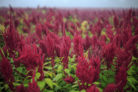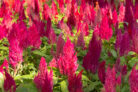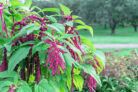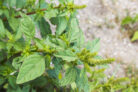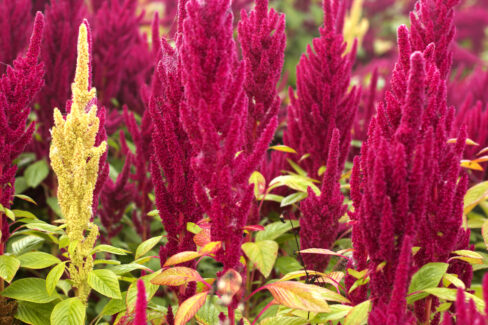
Amaranth is often called “Love-Lies-Bleeding” or “Tassel Flower” because of its striking, drooping blooms. While the varieties we grow in our gardens are famous for their show-stopping colors, you might occasionally spot wild versions with more subtle green flowers.
Wind Pollination
One interesting thing about amaranth is that it doesn’t need bees or butterflies to get the job done—it’s actually wind-pollinated! Because it doesn’t need to “lure” insects in, the individual flowers are quite simple. Even so, the cultivated varieties we love put on a gorgeous display of pinks and deep reds.
Once pollination is successful, those colorful flower heads usually hold their hue well into the fall. When you start to see them turning a bit brownish, that’s your signal that the seeds are ripening and your harvest is just around the corner.
Blooming Season
Typically, amaranth blooms from July through September. If you start your seeds indoors early, you’ll likely see those flowers pop a bit sooner. Generally, these beauties will keep the garden looking bright all summer long and right into autumn. Just a heads-up: any flowers that don’t show up until September usually won’t have enough time to produce mature seeds before the cold hits.
Even though many of us grow amaranth just because it looks stunning in the flower bed, the whole plant is actually edible! Beyond using the mature seeds as a gluten-free “pseudograin,” you can cook the leaves just like spinach. Those tender, late-season flower heads that won’t make it to seed can also be tossed into a pan and cooked up before the first frost.
Harvesting the Flower Heads
Timing is everything when it comes to harvesting amaranth. If you pick them too early, the seeds will look pale, white, or even translucent. You can still eat them, but they won’t work if you’re planning to save them for next year’s planting. To get these immature seeds out, you’ll need to dry the flower heads first and then rub them to release the grain.
Fully ripe seeds, on the other hand, will practically fall out of the flower heads on their own—perfect for planting amaranth again next season. The only downside? Since they drop so easily, if you wait too long to harvest, you might find that a good chunk of your crop has already scattered itself on the ground!