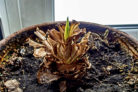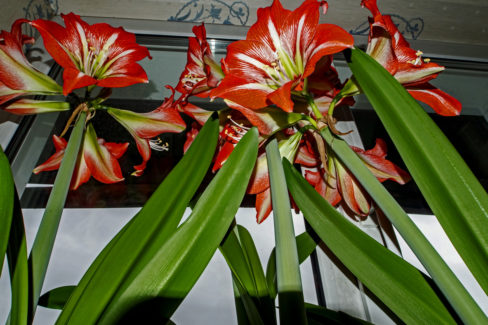
If you’re staring at an Amaryllis that’s all floppy green leaves and zero flowers, your first instinct might be to grab the garden shears. But hold on! Cutting those long leaves back won’t actually solve your problem. Here is the lowdown on what’s actually going on with your plant and how to fix it.
Don’t Cut Those Green Leaves!
To understand your Amaryllis, you have to remember its subtropical roots. Those leaves aren’t just for show; they are the engine of the plant. Usually, the foliage really takes off right as the blooming phase ends. During the summer growth period, the leaves soak up energy to create next year’s flower buds deep inside the bulb. If you snip off those long green leaves now, you’re essentially cutting off the plant’s food supply. Do that, and your Amaryllis likely won’t have the energy to bloom again next season.
The Right Way to Prune Your Amaryllis
I get it—those long, gangly leaves can look a bit messy. However, you need to wait until they have completely dried up and turned yellow or brown on their own before you reach for the scissors. Once they’re totally dead, you can grab a pair of clean shears and carefully trim them off at the base.
Why Are the Leaves So Long Anyway?
Plants have a way of telling us when they’re unhappy! If your Amaryllis is growing nothing but leaves that seem unnaturally long, it’s usually a cry for help regarding its location. Most of the time, this “leggy” growth means your plant isn’t getting nearly enough light. It’s stretching out as far as it can to find the sun. Without enough light, the bulb won’t get the signal (or the energy) to produce those gorgeous trumpet-shaped flowers we all love.
Your Amaryllis Action Plan
- Move your Amaryllis to a warm, sunny spot (a south-facing window is usually best).
- Keep watering as usual, ideally from the bottom so the bulb doesn’t rot.
- Feed your plant with a liquid fertilizer every two weeks.
Once the lighting is just right, the plant’s photosynthesis will kick back into high gear. If you keep up with a good care routine, you won’t have to wait long for a comeback. In fact, a happy Amaryllis can even surprise you with a summer bloom!
A Quick Heads-Up on Stains and Safety
One little pro-tip: when the flowers eventually fade, those withered petals can drop a lot of pigment. They’ll stain windowsills, curtains, or rugs in a heartbeat if you aren’t careful. Make sure to tidy up spent blooms and debris quickly. And don’t forget—Amaryllis is toxic, so it’s always a smart move to pop on some gardening gloves before you start handling the plant!