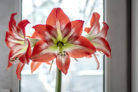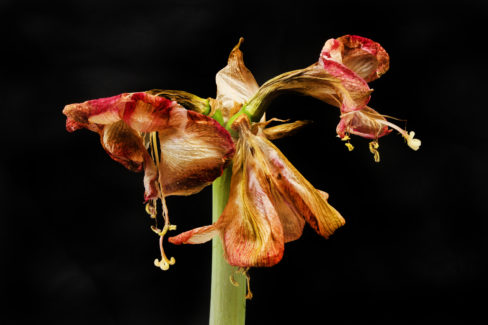
To keep your Amaryllis happy and healthy, a little strategic pruning is key. Luckily, this “Knight’s Star” is a great communicator—it’ll actually tell you exactly when it’s ready for a trim! Here’s the lowdown on when to snip those spent parts and, more importantly, which leaves you should never touch.
Gently removing wilted blooms
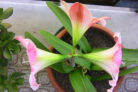
As winter winds down, your Amaryllis will likely be finishing up its big show. Unless you’re planning on harvesting seeds, this is the perfect time to cut away those faded flowers.
Since the flowers don’t all bloom (or fade) at once, here’s your game plan:
- Safety first: Put on some gardening gloves. The sap is toxic and can irritate your skin.
- The snip: Use a clean, sharp pair of shears to cut the wilted blossoms off the main stalk.
- Patience pays: Don’t cut the main flower stalk down to about 2 inches (5 cm) until it has completely turned yellow.
Pro Tip: Watch out for stains! The pigments in Amaryllis petals are incredibly strong and can ruin tablecloths or curtains. It’s a good idea to pluck off individual withered petals before they have a chance to fall.
Hands off the green leaves!
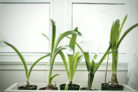
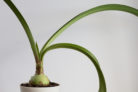
One of the quirks of the Amaryllis is that its leaves show up late to the party and stick around all summer. Once the flowering ends, the plant shifts into its summer growth phase, and those leaves are the MVP. While you continue to water and fertilize from April through July, the bulb is busy developing next year’s bud inside. The green leaves are the “solar panels” fueling this process through photosynthesis. If you cut them early, you’re likely sacrificing next year’s flowers.
Let the plant tell you when it’s ready
Come late August, it’s time to stop watering and fertilizing. Move your plant to a cool, dark spot for its winter nap, and the leaves will eventually die back on their own. During this time, the bulb is actually sucking all the remaining nutrients out of the foliage. Once the leaves are completely dried up and crispy, you can safely trim them off.
Want to grow your own from scratch?
If you decide *not* to trim the faded flowers, they’ll develop seed pods in about eight weeks. You can harvest these seeds and plant them in coconut coir to grow your own Amaryllis from seed. Just a heads-up: it takes about four years for a seedling to produce its first bloom. Until then, keep your “babies” in a bright, warm spot—they don’t need a dormant period in the fall like the mature bulbs do.