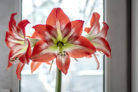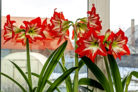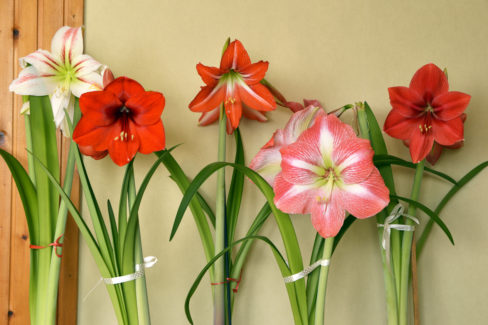
Taking care of an Amaryllis (or *Hippeastrum*) requires a little bit of flexibility. Between the variable planting times and those adaptive bloom cycles, you’ve got to stay on your toes! One of the most important tasks is knowing exactly when to reach for your garden shears. Luckily, this plant is a great communicator—it’ll tell you exactly when it’s ready for a trim.
Here is my guide on how and when to prune your Amaryllis like a pro.
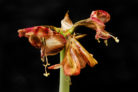
Snip those faded blooms
As the cold winter months wind down, your Amaryllis will eventually finish its big show. To make sure this subtropical beauty doesn’t waste its last bit of energy trying to produce seeds, you’ll want to cut off the faded flowers pretty quickly. Since the petals don’t all wither at the same time, here’s the best way to handle it:
- First things first: Pop on some gardening gloves. The sap is toxic and can be a skin irritant, so it’s better to be safe than sorry!
- Grab a sharp pair of kitchen shears or floral snips.
- Carefully snip off each individual wilted flower right where its little stem meets the main stalk.
- Once the entire main stalk starts to turn yellow, go ahead and cut it back to about 2 or 3 inches above the bulb.
Pro Tip: The pigment in these gorgeous flowers is incredibly intense and can leave nasty stains on furniture or rugs. Cutting them off as soon as they fade is the best way to prevent a mess. If you do get a stain, you might need a professional cleaner to get it out!
Leave the green leaves alone!
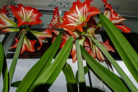
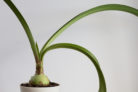
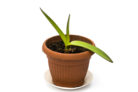
Amaryllis leaves usually show up a bit late to the party and stick around all summer long. Once the blooming phase ends, your plant shifts into its summer growth mode. During this time, those green leaves are absolute MVPs—they are busy performing photosynthesis to recharge the bulb.
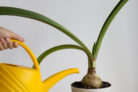
From April through July, keep watering your plant as usual and give it some fertilizer every two weeks. This care helps a new bud develop deep inside the bulb for next year. Photosynthesis provides all the essential nutrients that bud needs to grow. If you accidentally trim off the green leaves, you’re cutting off the plant’s food supply, which might mean no flowers next season!
Listen to your plant’s schedule
Come mid-August, it’s time to start tapering off the water and fertilizer. In September, move your plant to a cool, dark spot for its well-deserved nap (the dormancy phase). This is when the green leaves will slowly start to die back.
Don’t rush it! The bulb is actually pulling all the remaining nutrients out of the leaves and storing them. Once the leaves are completely dried up and crispy, the process is done. When you’re ready to bring your Amaryllis out of “hibernation,” you can snip off that dried foliage and repot the bulb in fresh soil.
Want to grow from seed?
If you decide *not* to snip the faded flowers, a pollinated plant can actually produce seeds within about eight weeks. You’ll see seed pods forming that look nice and plump when they’re ready.
You can cut these pods off, pop them open, and sow the seeds within three days into a low-nutrient seed-starting mix. Keep the seedlings moist and give them a bright, warm spot to grow. Just a heads-up: it takes a lot of patience to grow these from seed, so keep them in a cozy spot until they are ready for their very first bloom!