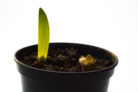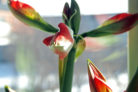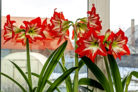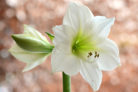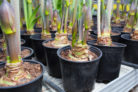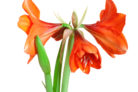
The colorful Amaryllis (also known as *Hippeastrum*) is a total lifesaver during those gloomy winter months, brightening up our homes with its elegant, bold blooms. To keep this beauty happy, you’ve got to give it a little “floral spa treatment” that mimics its subtropical origins. Here’s the lowdown on how to care for yours.
Pro Care Follows the Natural Growth Cycle
The secret to a thriving potted Amaryllis is following its natural rhythm. To really nail it, you’ll actually want to move your plant to a new “home” three times a year to meet its changing needs.
Here’s the game plan:
- Flowering Phase (December to April): Keep your Amaryllis in a bright spot near a window with temperatures between 68°F and 72°F.
- Growth Phase (May to early August): Your plant wants warmth and sun now. A sunny windowsill is great, or you can even move it out to the balcony or patio once the weather stays consistently warm.
- Dormancy Phase (September to late November): Time for a nap! Place your beauty in a dark, cool spot—like a basement—where temperatures hover around 55°F.
While these plants love light for photosynthesis, try to avoid scorching midday sun or trapped heat. It’s all about finding that “just right” bright spot.
Watering and Feeding the Right Way
Amaryllis do best in pots, but you have to adjust their “diet” depending on the season.
Here’s a quick cheat sheet for success:
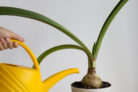
- Always water from the bottom. Pour lukewarm water into the saucer rather than over the bulb.
- Don’t overdo it. The soil inside the pot should stay slightly moist, but the very top layer should feel dry to the touch.
- During the growth phase, fertilize every two weeks using a standard liquid fertilizer for flowering plants.
Starting in August, stop watering and fertilizing entirely. This “rest period” ends in late November when it’s time to repot and start the cycle over.
A Little Pruning Goes a Long Way
To keep your plant looking its best, you’ll need to snip off those faded blooms.
Here’s how to do it safely:
- Wear gloves! The bulb is toxic, so it’s better to be safe than sorry.
- Use sharp scissors to cut off the wilted flowers first.
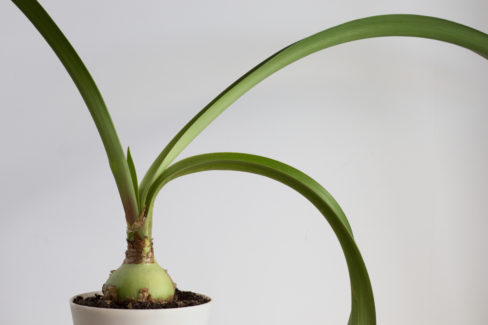
- Wait to cut the hollow stem until it has turned yellow and withered.
Pro Tip
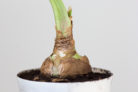
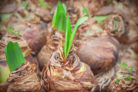
If your Amaryllis bulb has been around for a few years, give it a quick “mini-makeover.” Use a pair of tweezers to gently peel away the dry, papery outer layers of the bulb to keep it fresh and healthy.