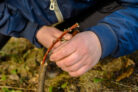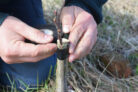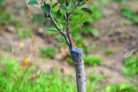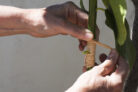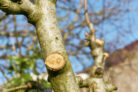
Grafting is basically the art of joining two different plants from the same family together so they grow as one. Since the top part usually comes from a high-quality variety, we call that the “scion.” While it might look a little intimidating at first, grafting by “copulation” (or whip grafting) is actually pretty straightforward once you get the hang of it!
Why bother with grafting?
Grafting is your go-to move when cuttings or layering just won’t take root. It’s the best way to make sure your new tree produces the exact same fruit as the parent. Besides whip grafting, there are other methods like bark grafting or budding (oculation). Gardeners often regraft a tree if the fruit quality has dipped, if the tree is prone to disease, or if they need to add a second variety to help with pollination. For whip grafting, your best window of opportunity is between January and April.
Here’s what you’ll need for whip grafting:
- Two pieces of wood of equal thickness (the scion and the rootstock)
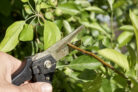
- Pruning shears to harvest your scions
- A razor-sharp grafting knife
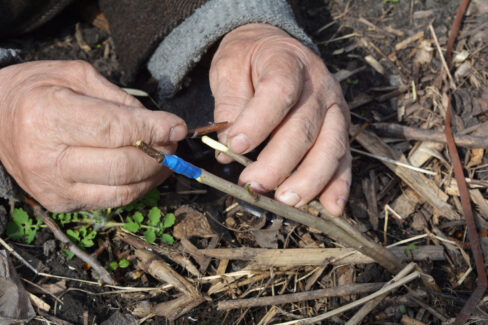
- Raffia or grafting bands to secure the joint
- Cold-application grafting wax
Prepping your scions
You’ll want to cut your scions in the winter while the tree is dormant. Look for a healthy, productive tree and pick out one-year-old shoots with short distances between the buds. You’ll usually find the best ones on the outer edges of the canopy where they get plenty of sun. For this method to work, your scion and rootstock need to be the same diameter. Make sure both pieces get the same angled cut so they fit together perfectly. If there are tiny gaps, your grafting bands will help snug them up.
Practice makes perfect
The “copulation cut” is the most important part of the process, so keep that grafting knife sharp! Ideally, the cut surface should be about three times as long as the branch is wide. I highly recommend practicing this cut on a few spare branches first just to get a feel for the wood before you do it for real.
The Rootstock
In addition to your scion, you’re going to need a rootstock—basically the root system. While the scion determines what kind of fruit you’ll be eating, the rootstock is the engine room. It controls the tree’s size, how sturdy it is in the ground, how soon it starts producing fruit, and the overall lifespan of your tree.