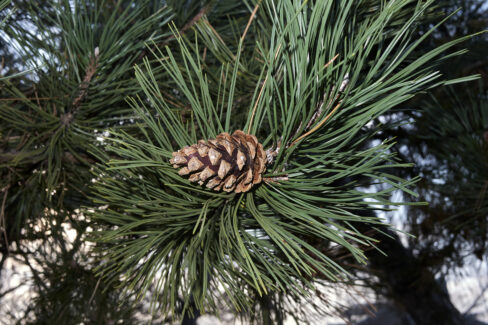
Most of us can spot a pine tree from a mile away, but telling different pine species apart? That’s where things get a little tricky! If you’ve ever found yourself staring at a tree wondering if it’s an Austrian Pine (Black Pine) or a Scots Pine, don’t worry—you’re not alone. With a few simple tips, you’ll be identifying them like a pro in no time. Here’s exactly what you need to look for.
Key Features to Watch For
When it comes to where they like to grow, the Scots Pine and the Austrian Pine are actually pretty similar. They both love the same kind of locations, so it’s common to see them growing side-by-side in the same park or forest. To tell them apart, you’ve got to look at the details.
Focus on these three things:
- The shape of the pine cones
- The color and texture of the bark
- The length and feel of the needles
Once you know what to look for, the differences are actually pretty obvious. If you want to practice your ID skills, checking out photos online is great, but nothing beats a trip to a local botanical garden or arboretum to see them up close!
How to Tell the Two Species Apart
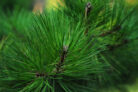
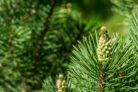
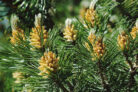
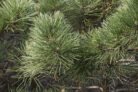
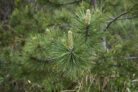
First, take a close look at the pine needles. This is usually the biggest giveaway. Austrian Pine needles are quite long—usually around 6 inches (15 cm). On the other hand, Scots Pine needles are much shorter, typically topping out at about 3 inches (7 cm). If you hold them side-by-side, the Austrian Pine needles are more than twice as long!
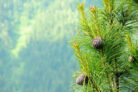
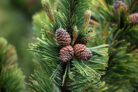
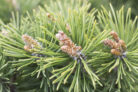
Next, check out the cones. Austrian Pine cones tend to be larger and have a very straight, symmetrical shape. Scots Pine cones, however, are often a bit “wonky” or curved. If the tree is dropping fruit, the cones are a fantastic clue to help you solve the mystery.
Finally, take a look at the bark. The Austrian Pine (true to its “Black Pine” nickname) has dark, grayish-black bark that looks pretty much the same from the ground all the way up the trunk. The Scots Pine is much more colorful! While the base of the trunk is a rugged brownish-red, the bark turns a beautiful, bright orange-cinnamon color as you look higher up toward the canopy.