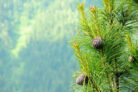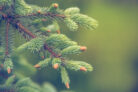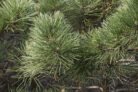
It’s super common for folks new to gardening or hiking to mix up spruces, pines, and firs. But once you know what to look for, telling them apart is actually pretty easy! There are a few key physical traits that make it clear whether you’re looking at a spruce or a pine.
The Most Obvious Differences
Both spruces and pines are staples of our local forests and landscapes. If you want to tell them apart quickly, you really only need to look at two things:
- The needles
- The cones
The Needles
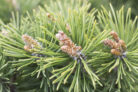
Pine trees actually have the longest needles of any native conifer. They can grow up to three inches long, and they’re surprisingly soft to the touch—they won’t prick your fingers!
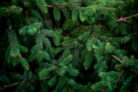
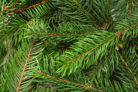
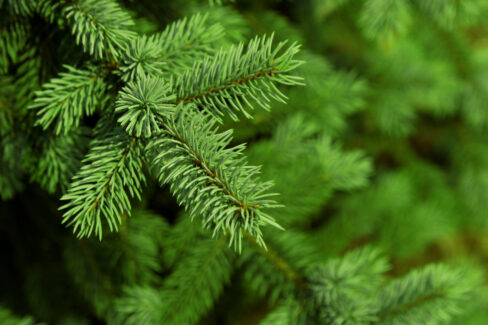
On the flip side, spruce needles are relatively short. They are also very stiff and sharp (a good way to remember is “S” for Spruce and “S” for Sharp). Another giveaway is how they grow: spruce needles grow all the way around the twig like a bottle brush. If you see needles growing flat on just two sides of the branch, you’re likely looking at a fir tree instead.
The Cones
You can also tell these two apart just by looking at the cones on the ground.
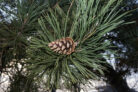
Pine cones are generally round or egg-shaped with thick, woody scales. Once the seeds inside are ripe, those big scales pop open to let the seeds fly out.
Spruce cones are much longer—sometimes reaching up to six inches! They have a very slender, cigar-like shape and the scales are much thinner and more delicate than a pine’s.
Other Ways to Tell Them Apart
If the needles and cones aren’t enough, you can also look at the bark and the overall shape of the tree.
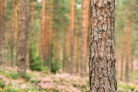
The bark on most spruce species tends to be reddish or reddish-brown and feels thin and scaly. Pine bark, however, is usually thicker, forming large plates, and leans more toward a gray or dark brown color.
Finally, take a look at the “silhouette” of the tree. Spruces are the giants of the forest, reaching a maximum height of nearly 200 feet, while pines usually top out around 130 feet. A spruce also has a very symmetrical, cone-shaped crown, whereas an older pine often looks a bit flatter or more irregular at the very top.