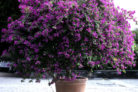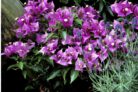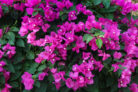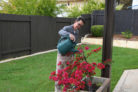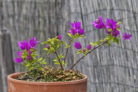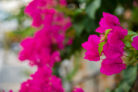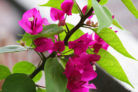
Bougainvillea, also known as the paperflower, is actually a pretty tough cookie. As long as you give it the right spot and a little TLC, it’s remarkably resistant to disease. That said, it’s always a good idea to keep a close eye on your plant so you can jump into action if something looks off.
The Culprits
Even though bougainvillea is generally robust, a few issues can still pop up. Usually, the trouble stems from one of these three things:
- Nutrient deficiencies
- Root rot
- Fungal infections
Nutrient Deficiencies
If your bougainvillea is looking a bit lackluster, it’s often a sign of a “hunger strike.” This happens when the plant isn’t getting the nutrients it needs to thrive. Here’s what to look for:
- Nitrogen deficiency: The entire leaf starts turning yellow.
- Iron deficiency (Chlorosis): The leaves turn yellow, but the veins stay bright green.
What to do:
- Give your plant a boost by fertilizing it.
- Stick to a regular feeding schedule to keep it happy.
- Be patient—it takes a little time for the plant to nurse itself back to health.
Root Rot
Root rot is what happens when your bougainvillea gets “wet feet.” If the soil stays soggy for too long, the roots literally start to rot away. Above ground, you’ll notice the foliage discoloring or the leaves falling off entirely.
What to do:
- Repot your bougainvillea into fresh, dry soil immediately.
- Trim away any mushy, rotted roots before replanting.
- Hold off on watering for a while to let things dry out.
- Pro tip: To prevent this, make sure your pot has great drainage and keep the plant in a spot protected from heavy rain.
Fungal Infections
Fungal issues can be stubborn and spread like wildfire—not just on your bougainvillea, but to your other garden plants too. If you spot a fungus, isolate the plant right away!
Mildew
While mildew isn’t super common on bougainvilleas, it’s a pain to get rid of once it takes hold. Depending on the type of fungus and the weather, it looks like this:
- Powdery Mildew: A white, flour-like coating on the tops of the leaves (usually during nice weather).
- Downy Mildew: A grayish, fuzzy mold on the undersides of the leaves (usually when it’s damp).
What to do:
- Give the plant a heavy pruning to remove infected areas.
- For mild cases, try home remedies like a baking soda spray or a milk-and-water mixture.
- If it’s a serious breakout, you’ll likely need a proper fungicide.
Gray Mold (Botrytis)
Gray mold (Botrytis cinerea) is a sneaky one that specifically targets the bracts—those colorful, papery “leaves” that everyone thinks are the flowers. You’ll notice:
- Wilting
- Rotting spots
- A fuzzy gray mold covering the affected areas.
Botrytis loves high humidity and temperatures between 50°F and 70°F. It can even start if you accidentally splash the bracts while watering. It also thrives when plants are crowded together and can’t dry off after a rainstorm.
What to do:
- Treat the plant with a fungicide labeled for Botrytis.
- Prevention is key: Give your plants plenty of “elbow room” for airflow and always water at the base of the plant to keep the foliage dry.