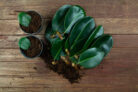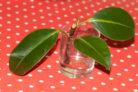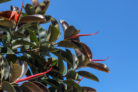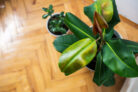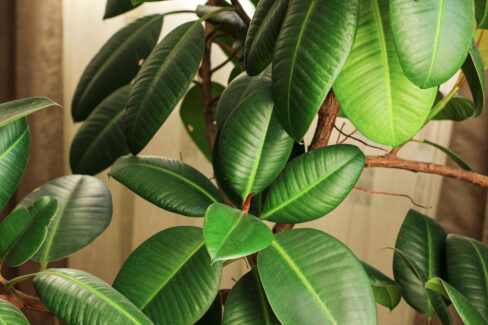
Rubber plants (*Ficus elastica*) are super versatile—you can keep them tall and sleek or encourage them to branch out into a bushy tree, depending on your space and style. Either way, a little strategic pruning is all it takes to get your plant growing exactly how you want it.
To get your *Ficus elastica* to branch out, you’ll want to make your cuts just above:
- A “sleeping eye” (those tiny little bumps on the stem) or
- A leaf node.
With the right care, you’ll usually see two new shoots pop up just below the cut. On older, established trees, you might even get more! Because of this, it’s a good idea to step back and visualize where you want those new branches to start before you start clipping.
You can encourage branching on:
- The main trunk
- The side branches
Branching the Main Trunk
In the wild, rubber plants usually start branching on their own once they hit about 5 to 6 feet tall. If yours is being a bit stubborn or if you want to start shaping it while it’s still small, it’s time to grab the shears.
To encourage a young rubber plant to develop a crown, snip the main trunk just above the third to fifth pair of leaves.
If your plant already has some branches but you want more, here’s the game plan:
- Find the highest branch you want to keep.
- Count up two or three leaves toward the top of the plant.
- Cut the trunk about an inch above that last leaf.
To make sure your tree stays balanced and stable, take a look at the side branches after you’ve topped the main trunk:
- Trim back any side branches that are taller or longer than the rest.
- Shorten the side branches directly below your main cut down to about two leaf pairs.
Branching Side Shoots
If you want a bushier look overall, you can prune the side branches themselves. Just snip them at your desired length, again making sure to cut just above a leaf or a sleeping eye.
Tools and Technique
No matter where you’re cutting, you always want to aim for a:
- Straight, horizontal cut
- Clean, smooth surface
Avoid crushing the stem! If the cut isn’t clean, you’ll need to try again slightly lower down to protect your plant from diseases and pests.
To get it right the first time, always use sharp, sterilized pruning shears or a knife. You don’t usually need a wound sealant, but if the milky sap (latex) keeps dripping for a long time, you can apply a little to help the plant heal.