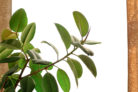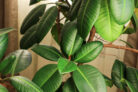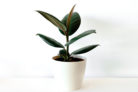
In the gardening world, we usually talk about “rejuvenating” a plant when we’re giving it a radical haircut to encourage new growth. But when it comes to the Rubber Tree (*Ficus elastica*), things work a little differently. For these indoor favorites, rejuvenating actually means starting fresh by creating brand-new plants from your older, perhaps slightly leggy or “bald” specimens.
Rejuvenating Your Rubber Tree
If your Rubber Tree is looking a bit tired, there are two great ways to get some fresh, young plants going:
- Air Layering
- Cuttings
Air Layering
The biggest perk of air layering is that you get a decent-sized plant right from the start. Plus, these “new” plants usually come with several leaves already attached. The downside? It’s a bit more technical than taking a simple cutting and requires a healthy dose of patience. If you want to give this a shot, the best time to start is in early spring—March is usually the sweet spot.
Setting the Wrap
- Pick out a healthy, strong branch.
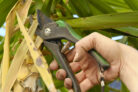
- Make an upward diagonal cut just below a leaf node.
- Cut a few centimeters deep into the stem.
- To keep the cut from healing shut, wedge a small wooden splinter or a matchstick into the gap.
- Wrap the cut area with a generous amount of soaking wet moss (sphagnum moss works great).
- Wrap a layer of clear plastic film over the moss and secure it at the top and bottom with some twine or ties.
Now comes the waiting game. You shouldn’t remove the wrap until you can see it’s packed with roots through the plastic. This can take a few months! In the meantime, keep caring for your main plant as usual. Just make sure that moss stays damp—if it looks like it’s drying out, you can use a syringe to inject a little water into the wrap.
Removing the Wrap
Once that little package is bursting with roots, cut the branch off just below the root ball. Carefully peel away the plastic and moss, then pot your “new” little Rubber Tree in a container with some good potting soil. From here on out, treat it just like a mature plant!
Cuttings
Using cuttings is definitely the easier route if you’re looking for a low-fuss way to propagate. The only catch is that it’ll take a lot longer before you have a large, impressive plant.
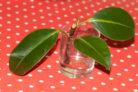
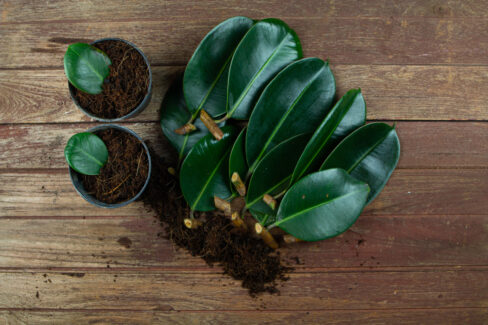
You can take cuttings from the soft tips of the plant or from a woodier stem that has a “sleeping bud” (a node). Either way, strip off all the leaves except for the very top one. If you’re using a tip cutting, pop it into a glass of lukewarm water. If you’re using a stem cutting, you can plant it directly into some seed-starting soil.
After a few weeks, once your cutting has developed a solid root system, you can move it into its own small pot with regular soil.