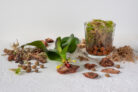
The Rubber Tree (botanically known as *Ficus elastica*) is one of those classic, low-maintenance houseplants we all love. It’s pretty chill when it comes to water and nutrients, but it does have one major deal-breaker: it absolutely hates “wet feet.” This might make you wonder—can a Rubber Tree actually thrive in a hydroponic setup?
Hydroponics 101
In hydroponics, we ditch the traditional potting soil and use expanded clay pebbles (LECA) instead. You’ve probably seen these little brown clay balls or granules at the garden center. Instead of pouring water directly onto soil, you fill a reservoir through a specific opening, and a handy water level indicator tells you exactly how much is in there. Most indoor gardeners find hydroponics way easier than soil because you don’t have to water nearly as often.
Rubber Trees and Hydroponics
Usually, hydroponics is the go-to for plants that crave constant moisture. Even though the Rubber Tree isn’t exactly a water-lover, it can actually do quite well in clay pebbles! The secret is being extra careful with that water reservoir so your *Ficus elastica* doesn’t end up drowning.
Watering Tips
To make sure your Rubber Tree doesn’t get waterlogged, you’ve got to keep a close eye on that water level indicator. Never let the needle go past the “Optimum” (Opt.) mark. It’s also super important to give the plant a “dry spell” between refills. Here’s my tried-and-true routine:
- Fill the pot until the indicator hits the “Optimum” mark.
- Wait until the indicator has been sitting at “Minimum” (MIN) for about four days.
- Only then is it time to water again.
Pro tip: If you notice a funky smell coming from the pot, that’s a major red flag that you’ve overwatered and things are getting swampy down there.
Fertilizing
Just like a plant growing in soil, a hydroponic *Ficus elastica* needs a little nutritional boost to stay healthy. Here’s the game plan:
- Fertilize every six months.
- Ideally, do this once in the spring and once in the fall.
- Use a solid hydroponic fertilizer (about one to two tablespoons, depending on how big your plant is).
To make sure the nutrients actually reach the roots, sprinkle the fertilizer over the clay pebbles and then rinse it down with water. To keep the water balance perfect, wait until your scheduled watering day to add the fertilizer.
Switching from Soil to Hydroponics
Can you move a Rubber Tree from soil to hydro? Absolutely! The most important step is to gently but thoroughly wash every bit of soil off the roots before tucking it into the clay pebbles.
Alternatively, you can start fresh by placing cuttings directly into the LECA. For the best root growth, I recommend using medium-sized clay pebbles (around the 6/18 size) to give those new roots plenty of room to breathe.