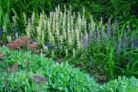
If you’re looking to cover a lot of ground quickly with something that actually looks good, Bugleweed (also known as Ajuga) is a fantastic choice. But here’s the catch: it’s a bit *too* good at its job. If you aren’t careful, it’ll hop right over its boundaries and start crowding out your other favorite plants. To keep your garden from becoming an accidental Ajuga farm, you’ll need a solid game plan.
Don’t wait too long
The reason Carpet Bugleweed spreads like wildfire is its “double-threat” reproduction strategy. It’s a prolific self-seeder, but it also spreads aggressively through runners (stolons) along the ground. To keep it in check, you have to tackle both of these methods at the same time.
Pruning after the bloom
The first rule of thumb? Keep your garden shears or a sharp knife handy once the blooming season wraps up. You want to be diligent about deadheading—removing those faded flowers as soon as they wither. If you leave them on the plant, they’ll drop seeds everywhere, and you’ll start finding little Bugleweed “surprises” in every corner of your yard.
Edging your flower beds
Since Bugleweed spreads via runners, you need a physical barrier at the edge of its designated spot. Now, usually, we think of root barriers as something buried deep underground. But with Bugleweed, the runners travel right across the surface. This means your garden edging needs to be high enough to actually block those creeping stems from jumping the fence.
The last resort: Digging it out
If the Bugleweed has already staged a coup in your lawn or other flower beds, it’s time to grab the spade. Don’t just try to pull it up by hand! If you leave even a tiny piece of root behind, it’ll grow right back. You’ve got to dig deep and be thorough to make sure you’ve cleared out the entire root system.
To keep your Carpet Bugleweed under control, remember these three steps:
- Prune back after flowering
- Install high garden edging
- Dig out unwanted spreaders thoroughly