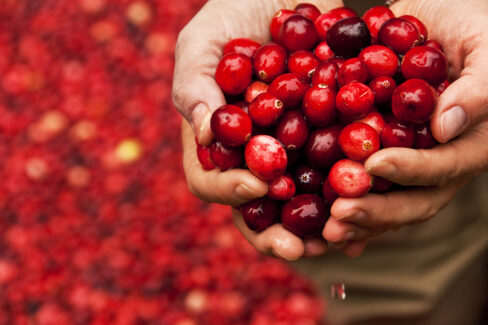
Cranberries aren’t exactly a staple in European gardens or kitchens just yet. But over here in the States, we’ve known for a long time just how great these vitamin-packed berries are. Luckily, more and more gardeners across the pond are starting to catch on to the “American Large-Fruited Cranberry.”
An American Classic
The cranberry is a true American original. It’s a Thanksgiving essential, and most of our harvest comes from the cooler regions of New England. These low-growing plants only reach about 8 inches in height, but they are incredibly hardy. If you’ve ever seen those famous harvest photos, you know that commercial growers actually flood the fields.
Since cranberries have little air pockets inside, they float to the surface, making it easy to gather huge quantities at once. This unique trait makes them one of the few berries that can be harvested on a massive industrial scale. You’ll find them in everything from juices and sauces to dried snacks—and sometimes even used as a natural filler in other fruit blends.
Are They Just Big Lingonberries?
Botanically speaking, the cranberry (*Vaccinium macrocarpon*) belongs to the heather family, right alongside the lingonberry. You might see cranberries labeled as “cultivated lingonberries” in some shops, but that’s not quite right. While they belong to the same genus and look a bit alike, they aren’t the same plant.
The cranberry is actually much more closely related to the bog cranberry (or mossberry), which grows wild in Northern Europe. However, our American variety is much larger and heartier than its wild European cousins.
Growing Cranberries in Your Own Backyard
Cranberries are often marketed as a “superfood” because they are loaded with vitamins and antioxidants. The best part? They are incredibly cold-hardy, which means you can easily grow them in your own backyard.
If you’re planning to plant your own cranberries, give them a spot in the full sun. While they can handle a bit of partial shade, you’ll get much sweeter, more flavorful berries if they get plenty of sunlight. Just remember: these plants love moisture. To keep them happy, make sure the soil stays consistently damp. Using a good layer of mulch or planting them alongside groundcovers is a great way to lock in that moisture and keep your berries thriving.