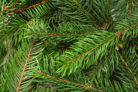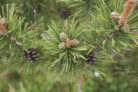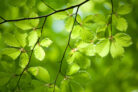
Most of us grow up thinking there’s a clear-cut line in the forest: evergreens have needles and deciduous trees have leaves. But if you want to get technical (and impress your friends at the next garden party), that’s not entirely true. In the eyes of a botanist, needles are actually just leaves that have taken on a very specific, rugged shape!
Needles are just leaves in disguise
Even though a pine needle and a maple leaf look nothing alike, they’re basically doing the same job. Both are the “solar panels” of the tree, using chlorophyll and sunlight to create energy through photosynthesis. While deciduous trees use those broad, flat surfaces to soak up the sun, evergreens do the exact same thing with their slender needles.
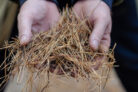
Because they serve the same biological purpose, botanists actually refer to needles as “acicular leaves” or simply “needle-leaves.” So, next time you’re raking up pine straw, remember—you’re technically just raking up very skinny leaves!
Not all needles are created equal
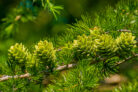
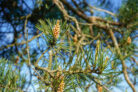
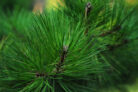
While most conifers follow a similar design plan, there’s actually a ton of variety out there. Needles can differ wildly in length, width, and even color.
And here’s a pro tip: don’t assume every needle is going to prick your finger! While many are stiff and sharp, there are several conifers with soft needles that are actually quite pleasant to touch. A couple of my favorites include:
- The European Larch
- The Common Juniper
The “rule breakers” with real leaves
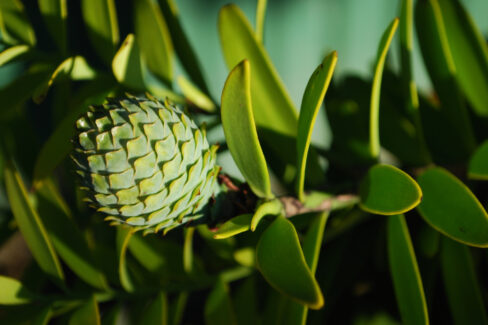
While our local pines and firs have that classic needle look, there are some exotic cousins out there that really blur the lines. These trees are technically conifers, but their “needles” look surprisingly like regular leaves. You’ll mostly find these unique beauties in warmer climates, such as:
- Kauri trees (native to Southeast Asia, Australia, and New Zealand)
- Afrocarpus species (from East Africa)
- The Broad-leaved Yellowwood (from South Africa)
Because these trees are used to tropical or subtropical weather, they won’t survive a typical backyard winter in most parts of the U.S. Still, they’re a great reminder that nature doesn’t always like to stay inside the boxes we create for it.
Spotting “impostor” growth
If you’re looking up at your favorite evergreen and suddenly notice a vine or a branch with broad leaves growing out of it, don’t worry—your tree hasn’t mutated! You’re likely looking at Mistletoe. This famous holiday plant is actually a parasite that hitches a ride on the branches of other trees to steal nutrients. In many regions, you’ll often spot the white-berried variety tucked away in the high branches of firs and pines.