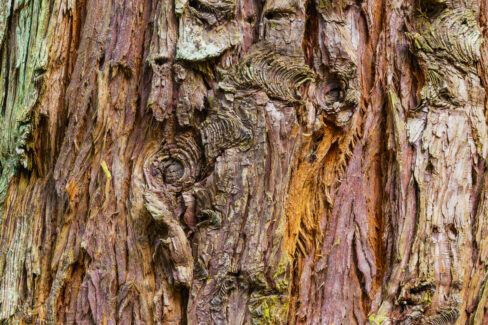
Die Douglasie hat eine markante Rinde, an der Sie den Baum auch erkennen können. Im Lauf des Lebens einer Pflanze verändert sich diese. Hier erhalten Sie die wichtigsten Informationen zu Merkmalen und Optik der Rinde.
So verändert sich die Rinde der Douglasie
When we look at trees, we usually focus on the leaves or needles, but the bark can be just as much of a showstopper! The Douglas Fir is a perfect example. It has a beautiful, tactile bark that’s a real treat for the eyes. As long as those Douglas Fir roots are soaking up plenty of water and nutrients, the bark will look healthy and vibrant. What makes this tree especially cool is how much its look transforms as it ages.
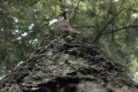
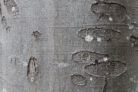
Young Douglas Firs look totally different from the “old-timers.” When they’re young, the bark is remarkably smooth and usually a sleek grey color. If you look closely, you’ll see little resin blisters—tiny droplets of sap—peeking out from the surface.
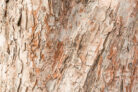
As the tree matures, it goes through a bit of a glow-up. The bark darkens significantly, often turning a rich reddish-brown. It also gets much thicker, developing a rugged, corky texture. You’ll notice deep, vertical furrows and cracks that give the tree its iconic, weathered look.
So unterscheiden Sie Douglasien von Fichten
It’s super common to mistake a Douglas Fir for a Spruce—they definitely look like cousins! But once you know what to look for, you’ll be able to tell them apart like a pro. The bark is actually your best clue. Here’s what to keep an eye on:
Die wichtigsten Unterscheidungsmerkmale:
- Take a close look at the texture of the outer bark.
- Douglas Firs have those deep, distinctive cracks and furrows.
- Spruce trees, on the other hand, tend to have bark that breaks off in small, roundish scales.
- The bark on a Douglas Fir is tough and solid.
- Spruce bark is much thinner and can often be flaked off easily by hand.