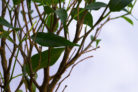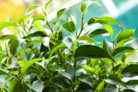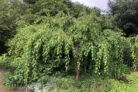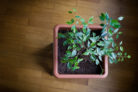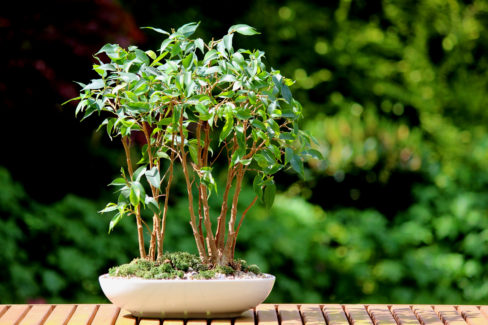
The Ficus Benjamini (often called the Weeping Fig) makes a fantastic bonsai. Whether you keep it indoors or move it outside during the warmer months, it’s a total showstopper. However, growing a tree in miniature comes with a few specific rules for success. Here’s everything you need to know about keeping your Ficus bonsai happy and healthy.
The Perfect Spot for Your Bonsai
Generally speaking, a Ficus bonsai wants the same things as its full-sized cousins in pots. When choosing the right location, look for a spot that is:
- Bright and warm,
- Gets indirect light or partial shade,
- Protected from harsh, direct midday sun.
Taking Your Bonsai Outdoors
Your balcony or patio can be a great summer home for your bonsai. From May through September, these trees love the fresh air. Just be careful: if you put it in direct, scorching sunlight, the leaves will get a nasty sunburn.
You’ll also want to protect your little tree from strong winds and heavy downpours. The best spot is usually tucked near a house wall, under a roof overhang, or beneath an awning.
How to Pot Your Bonsai
Bonsai live in shallow containers with specialized soil. If you’re ready to transition your Ficus into a bonsai pot, here’s the game plan:
- Place a small plastic mesh over the drainage holes at the bottom of the tray. This keeps the soil in and ensures water can flow out freely—no one likes soggy roots!
- Add a base layer of substrate. A good mix is about two parts potting soil to one part Akadama (clay granules) and expanded clay.
- Position the tree’s roots onto the substrate and fill the rest of the tray with soil. Gently press it down and give it a good misting.
Shaping Your Tree
To get that classic bonsai look, you’ll need to use specialized bonsai wire to guide the branches. Just be gentle! Make sure you don’t trap leaves or buds under the wire. After a few weeks, the branches will “learn” their new direction, and you can carefully remove the wire.
General Care Tips
The Ficus Benjamini isn’t too high-maintenance, even as a bonsai. The golden rule? Keep the soil consistently moist but never waterlogged. Standing water is the fastest way to kill a Ficus, whether it’s a tiny bonsai or a floor plant.
Feed your tree regularly with a standard liquid fertilizer. From March to September, you can fertilize every one to two weeks. During the winter (October to February), once every four to six weeks is plenty. Pro tip: Lightly water the soil before and after fertilizing to prevent the nutrients from “burning” the roots.
Pruning for the Perfect Shape
Because Ficus trees grow so fast, you’ll need to prune your bonsai much more often than a regular houseplant. To keep it from losing its shape, give it a trim every six weeks or so during the growing season (March to July). Don’t just cut back the long “runaway” shoots; you should also thin out areas where the leaves are getting too crowded.
A Quick Safety Warning
Don’t forget that Ficus sap is toxic and can really irritate your skin. Always wear gloves when pruning and wash your hands afterward. It’s also a good idea to dab the “wounds” with a paper towel to stop the sticky white sap from dripping all over the rest of the leaves.
The Secret to Tiny, Delicate Leaves
A bonsai looks most authentic when its leaves stay small and dainty. To achieve this, you can “trick” the tree into thinking it’s autumn. Carefully snip off the leaves, but leave the little stems (petioles) attached to the branch. Eventually, those stems will dry up and fall off on their own, and the new leaves that grow back from the buds will be much smaller.
You can repeat this process to keep the foliage refined, but give the tree a break! Let it recover for 6 to 12 months between “defoliations” and keep it in a very bright spot during the regrowth phase.
When to Repot
Eventually, your Ficus will become “root-bound,” meaning the roots have filled up the entire tray. Depending on the size of your pot, you’ll likely need to repot every two to four years. Choose a tray that is slightly larger than the old one. This is also the perfect time to trim away any old or rotted roots and give the healthy ones a light trim. Many gardeners like to coordinate repotting with a light pruning of the branches to keep the whole tree in balance.