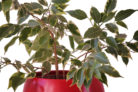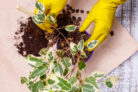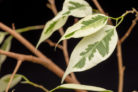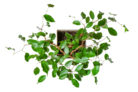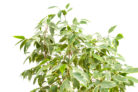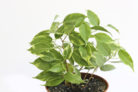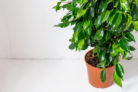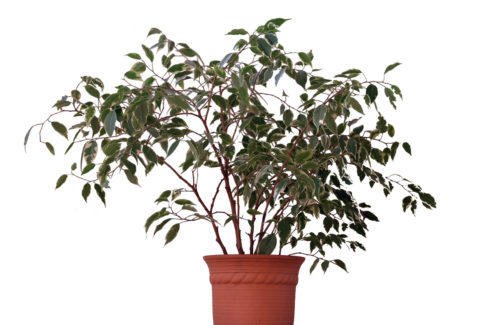
Whether your Ficus Benjamini is chilling on the patio or brightening up your living room, it’s unfortunately not invincible when it comes to pests. These “Weeping Figs” are pretty hardy, but a few tiny uninvited guests love to make themselves at home on their leaves.
Here’s a breakdown of the most common culprits and, more importantly, how you can show them the door.
The Most Common Ficus Pests
There are a handful of tiny troublemakers that have a particular soft spot for the Ficus Benjamini. Keep an eye out for:
- Aphids and Scale,
- Thrips, and
- Whiteflies.
Dealing with Aphids
Aphids are usually more of an issue for Ficus plants spending the summer outdoors on a balcony or in the garden. These little guys are only about 1 to 3 mm long, but because they hang out in large colonies, they’re pretty easy to spot on the foliage.
If you see them, don’t panic! You can knock them out with a simple DIY soapy spray. Just mix one tablespoon of liquid castile soap (or insecticidal soap) and one tablespoon of rubbing alcohol into a quart of water. Give the infested leaves a good misting, and that should do the trick.
Tackling Scale Insects
Scale are actually related to aphids, but they’re trickier because they hide under a hard, protective shell. Because of that “armor,” a standard soapy spray doesn’t always cut it. Your best bet here is high-percentage rubbing alcohol. Take a soft cloth or a cotton swab soaked in alcohol and rub it directly onto the infested spots. This penetrates the shell and neutralizes the pests effectively.
How to Handle Thrips
Thrips are tiny, slender insects often called “thunderbugs.” You’ll know they’ve arrived if you start seeing silvery speckles or streaks on your Ficus leaves.
If you spot these signs, the first step is to move your plant into “quarantine” so the thrips don’t spread to your other green friends. Give your Ficus a thorough shower—ideally holding it upside down or at an angle so you don’t soak the soil—to wash away the bulk of the insects. Afterward, keep the humidity high by misting both the tops and bottoms of the leaves daily with water.
If the infestation is stubborn, you can level up to a stronger spray. Mix about 4 teaspoons of liquid soap, 3 tablespoons of rubbing alcohol, a half-teaspoon of salt, and a pinch of rock meal (if you have it) into a quart of boiled (then cooled) water. Spray the leaves thoroughly.
Banishing Whiteflies
If you notice yellow mottling on the leaves and see a literal “white cloud” of tiny insects fly up when you ruffle the branches, you’ve got whiteflies.
To get these under control, use yellow sticky traps to catch the winged adults. For the larvae hiding on the undersides of the leaves, an organic insecticide based on canola oil (neem oil also works great here!) is usually the most effective way to clear them out.